Nemesis
View All Tags
In Greek religion, Nemesis was not simply a goddess of vengeance. Her role was more measured and judicial. She corrected imbalance. A person who enjoyed extraordinary prosperity might attract Nemesis if that prosperity led to arrogance or contempt for the gods. This made her an important personification of a deeply rooted Greek idea: that excessive fortune could be dangerous if it caused a person to forget moderation. Her most famous sanctuary was at **Rhamnous in Attica**, where she was worshipped as an important local deity and where a celebrated cult statue was created in the Classical period.
Nemesis was represented in several ways in Greek and Roman art. She might carry a measuring rod, scales, a bridle, a wheel, or other objects associated with proportion, restraint, and the changing nature of fortune. One particularly distinctive gesture shows her drawing part of her garment outward from her chest, a pose frequently used on Roman provincial coins. These attributes helped communicate the idea that Nemesis measured human behavior and imposed limits upon those who exceeded what was appropriate.
Under the Romans, Nemesis remained popular and acquired additional associations with fate, justice, competition, and military success. She was especially connected with arenas and amphitheaters, where gladiators and others might seek her favor before contests in which fortune and death were closely intertwined. On Roman imperial and provincial coinage, Nemesis could symbolize the emperor’s ability to punish wrongdoing and maintain order. Her image thus bridged Greek religious ideas about divine retribution with Roman concepts of justice, authority, and the proper balance of power.
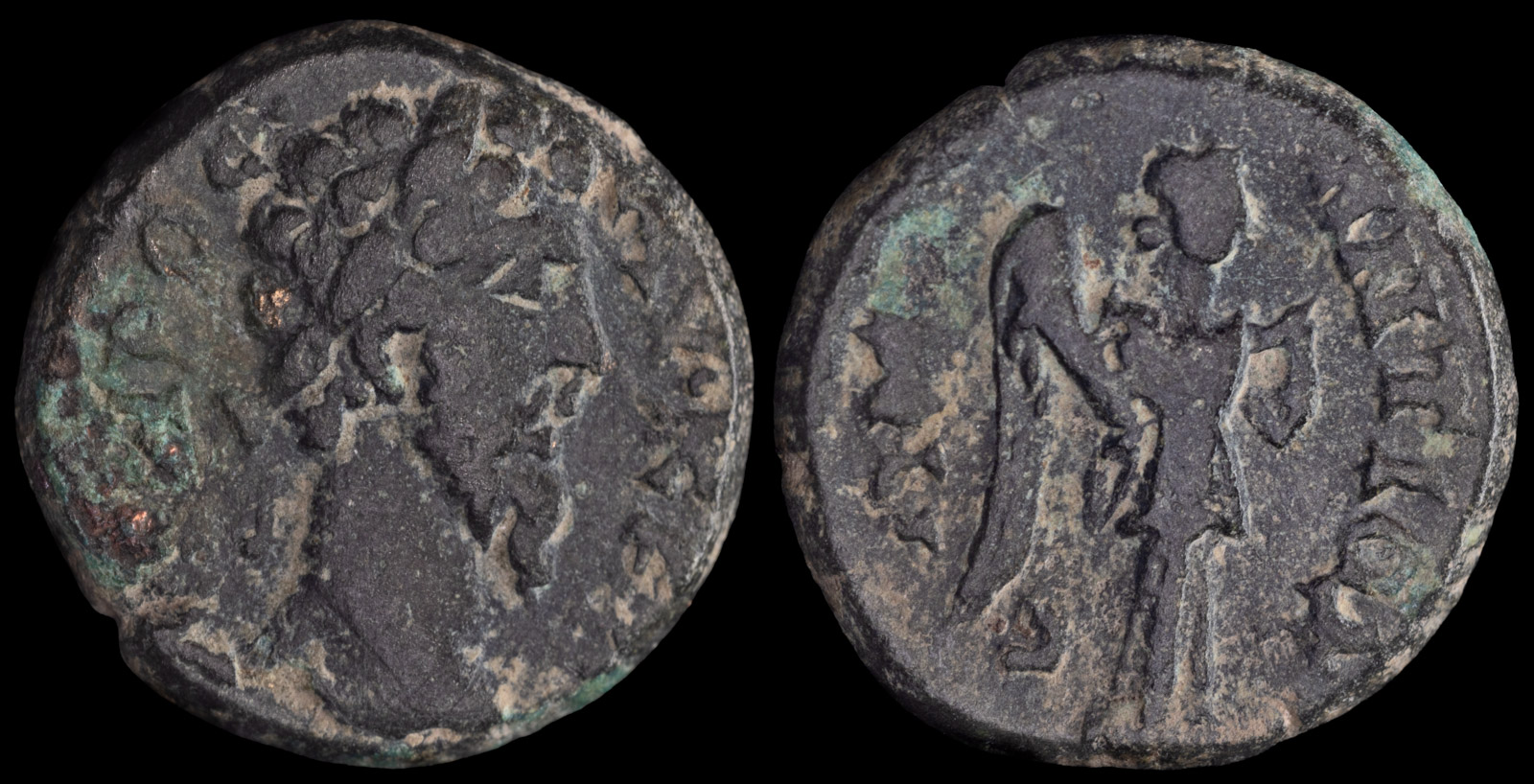
Karia, Antiochia ad Maeandrum
Lucius Verus. 161-169 CE
AE 14.5mm 2.78g
Obv: AY KAI Λ BHPOC, laureate head right.
Rev: ANTIOXEΩΝ, winged Nemesis standing right, holding cubit rule.
RPC IV online 829