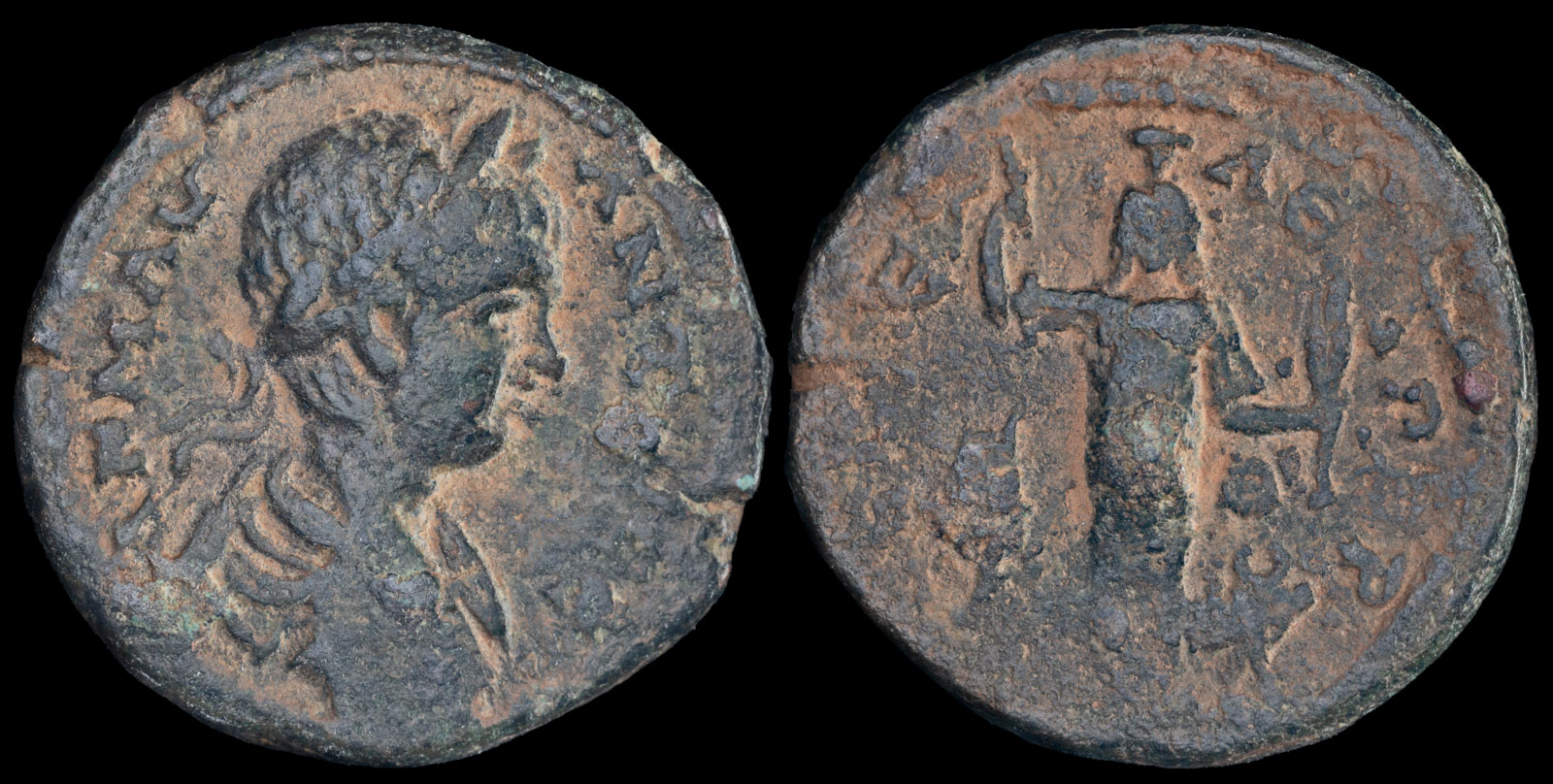
Judaea, Eleutheropolis
Caracalla. Dated RY 9 of Septimius Severus (207/8 CE)
Æ 23mm, 7.75g, 12h
Laureate, draped, and cuirassed bust right, seen from behind /
Hadad (Zeus-Heliopolites) standing facing, holding whip and ear of grain, flanked by two bulls; Є Θ (date) across field.
Spijkerman, Eleutheropolis 16; RPC V.3 Online 68392; Rosenberger 15; Sofaer 16; Dow, ACTTB, p. 46 (this coin)
Ex Joseph A. Dow Collection
Ex Amphora Coins
Eleutheropolis today is Bayt Jibrin, Israel. In pre-hellenistic times, it was known as Maresha, and was part of the Kingdom of Judaea until its destruction in 586 BCE, after which it belonged to the Edomite Kingdom. During Persian times, Sidonians settled there. During the Maccabaean revolt, Maresha served as a base against the Maccabaeans. Eventually, in 112 BCE, it was destroyed by John Hyrcanus and its inhabitants forced to convert to Judaism.
After Maresha was destroyed for good by the Parthians, nearby Begabris became the center. Its citizens were killed or enslaved by Vespasian during the Jewish War.
The city of Eleutheropolis, mentioned on this coin, was founded by Septimius Severus on January 1st, 200. Under Roman rule, it prospered. Over the years afterwards, the city was never truly destroyed, but waned until it became a small village.
Destruction of the Kingdom of Judaea. Eleutheropolis becomes part of the Edomite Kingdom
John Hyrcanus destroys Eleutheropolis
The Parthians permanently destroy Eleutheropolis
Inhabitants of Eleutheropolis killed or enslaved by Vespasian
Eleutheropolis refounded by Septimius Severus