Mountain
View All Tags
Among the Hittites, one of the great civilizations of Bronze Age Anatolia, mountains were often treated as deities in their own right. Hittite religious texts refer to numerous mountain gods who received offerings alongside major members of the pantheon. Mountains were believed to witness treaties, protect kingdoms, and serve as dwelling places for divine beings. In religious art, mountain gods were sometimes depicted in human form, standing upon rocky bases or represented by stylized peaks. Their role reflected the Hittite view that the landscape itself was alive with sacred power.
The connection between mountains and weather deities was especially important. Storm gods, among the most revered divinities in Anatolia, were believed to dwell upon mountain summits from which they controlled thunder, lightning, rain, and fertility. High peaks served as natural settings for encounters between heaven and earth, making them ideal locations for sanctuaries and cult activity. Sacred mountains often became focal points for rituals intended to secure rainfall, agricultural abundance, and divine protection.
During the Hellenistic and Roman periods, many Anatolian communities continued to venerate local mountains, often blending indigenous traditions with Greek and Roman religious practices. Several mountains were personified on coins and inscriptions, appearing as reclining male figures, bearded gods, or crowned personifications holding local symbols. These depictions emphasized the mountain’s role as guardian of the city, source of rivers and fertility, and marker of local identity. The continued appearance of mountain deities on coinage demonstrates how deeply rooted these beliefs remained even as political and cultural influences changed.
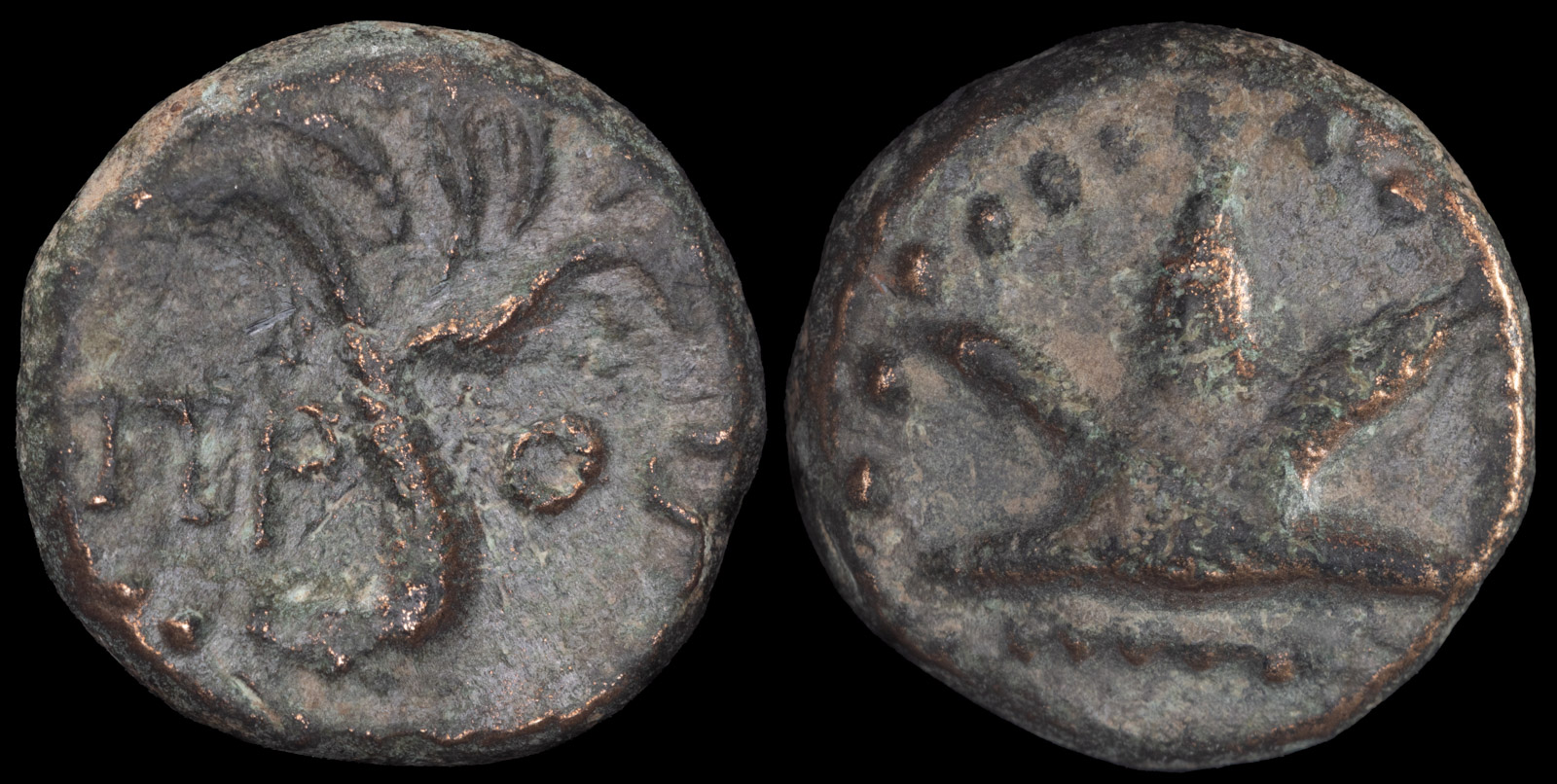
Pisidia, Prostanna
1st century BCE
AE 2.20g 12mm
Obv: Mount Viaros within dotted circle.
Rev: ΠΡΟC. Tree.
von Aulock, Pisidiens II, 1754-9; SNG Burdur 1403-4; SNG BN 1706