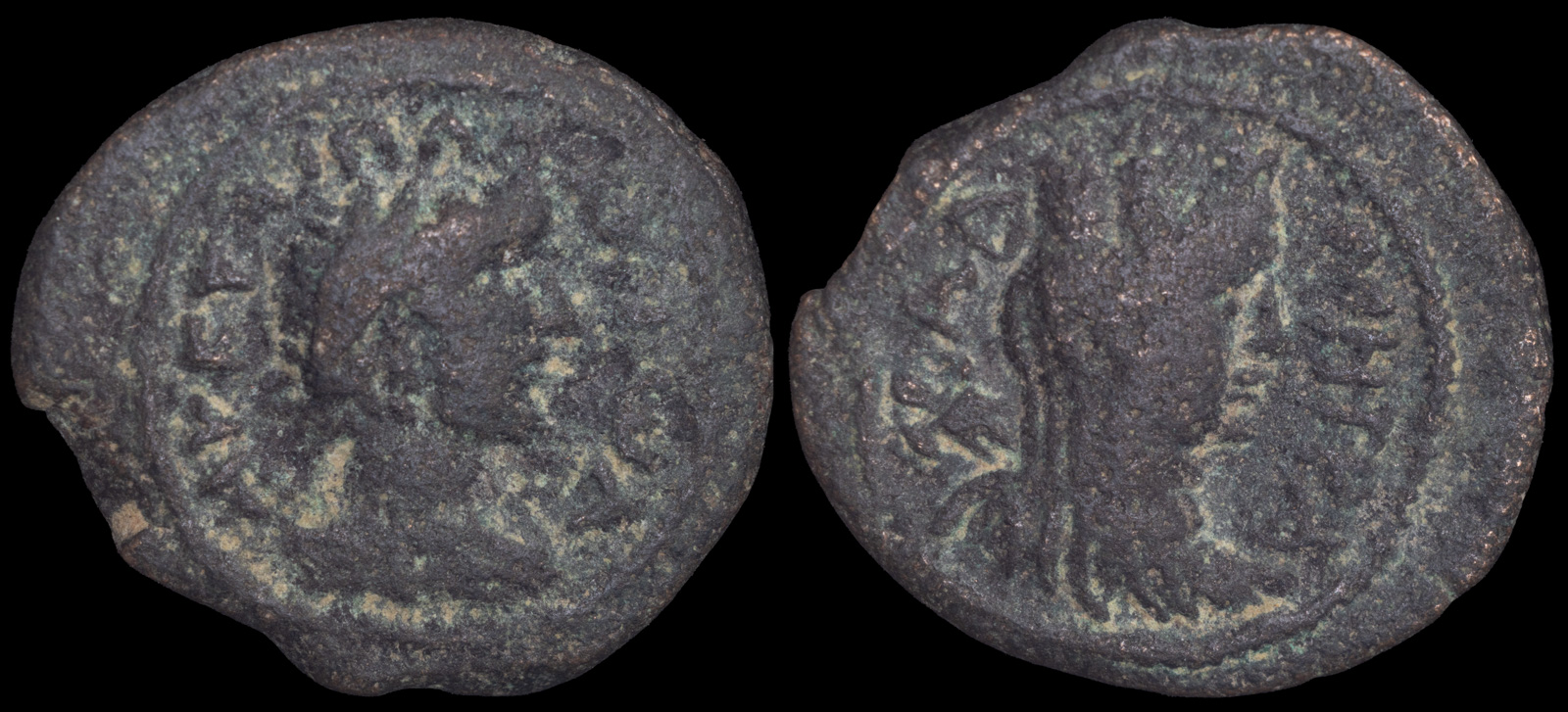
Decapolis, Gadara
Hadrian 117-138 CE
Æ 16mm, 2,53g
Obverse: ΣΕΒΑΣΤωΙ ΚΑΙΣΑΡ; laureate head of Claudius, right
Reverse: ΓΑΔΑΡΑ, L ΔΙΡ (before); veiled head of Tyche, right
Gadara was a member of the Decapolis and was situated in today’s Jordan, near its borders with Israel and Syria. It was situated on a steep ridge and by the 3rd century BCE was already a place of importance. The epigramist Meleager was born there.
According to Polybios, it was the strongest fortress in the area, but that didn’t prevent Antiochos III from conquering it. It then passed between the Ptolemies and the Seleukids, eventually severely damaged by the Hasmonean king Alexander Jannaios. The city sat in mostly ruins until rebuilt by Pompey.
In the second century CE, an aqueduct, 94km of which were underground, was built to supply water to Gadara. It is the longest known tunnel from antiquity.
Much of the ruins still stand, though are in a difficult location to access.
The Romans under Pompey rebuild Gadara
Gadara placed under the control of Heron the Great
On the death of Heron the Great, Antiochia ad Hippum and Gadara are returned to the province of Syria