Pine Cone
View All Tags
The pine cone was most famously associated with Dionysos and his ecstatic cult. His followers carried the thyrsos, a wand or staff topped with ivy and crowned with a pine cone. This distinctive object linked the wild vegetation of the god to the latent generative power of the natural world. In Dionysian rites the thyrsos symbolized spiritual awakening and the unleashing of hidden potential. The pine cone, positioned at the staff’s tip, represented the spark of divine life that Dionysos could ignite within his worshippers. It also pointed to transformation. Just as seeds burst from a cone in due season, the initiate of Dionysos was believed to undergo inner renewal through ritual, dance, and communion with the god.
Beyond its Dionysian context the pine cone sometimes appeared in funerary art and votive offerings. In these settings it evoked immortality or the hope for continued existence after death. The Greeks recognized the evergreen tree as a sign of enduring life, so its cone naturally carried similar connotations. Some deities linked to rebirth and boundaries, such as Hermes and Mên in the Anatolian world, could also appear with pine cone imagery, although the association was far less standard than with Dionysos. When used architecturally or ornamentally, pine cone motifs suggested prosperity and the presence of sacred power within a space.
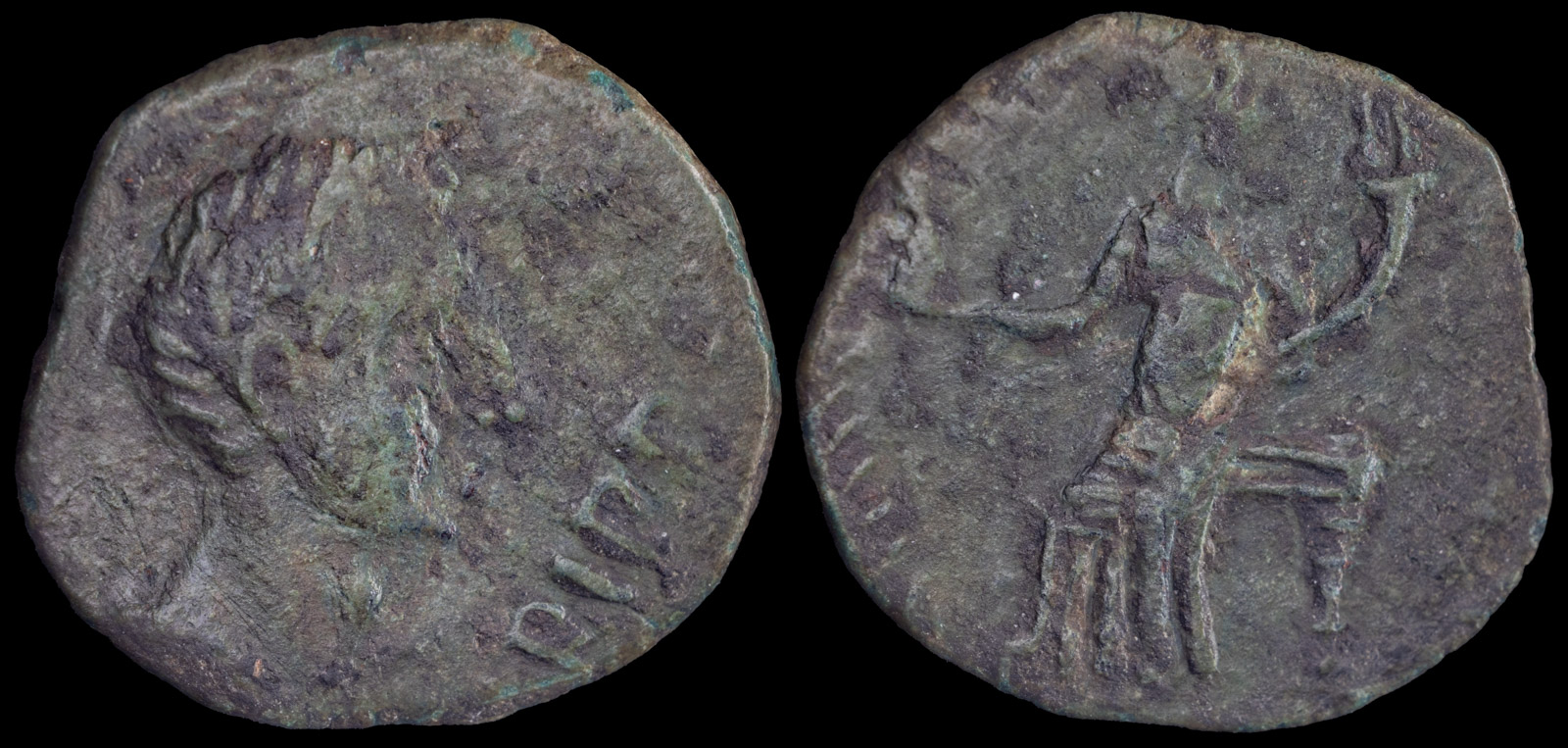
Spain, Irippo
AE 5.27g 25mm
Ca 30 BCE
Obv: Male head right – possibly Octavian.
Rev: Woman seated with pine cone and cornucopia.
Heiss p. 318 1
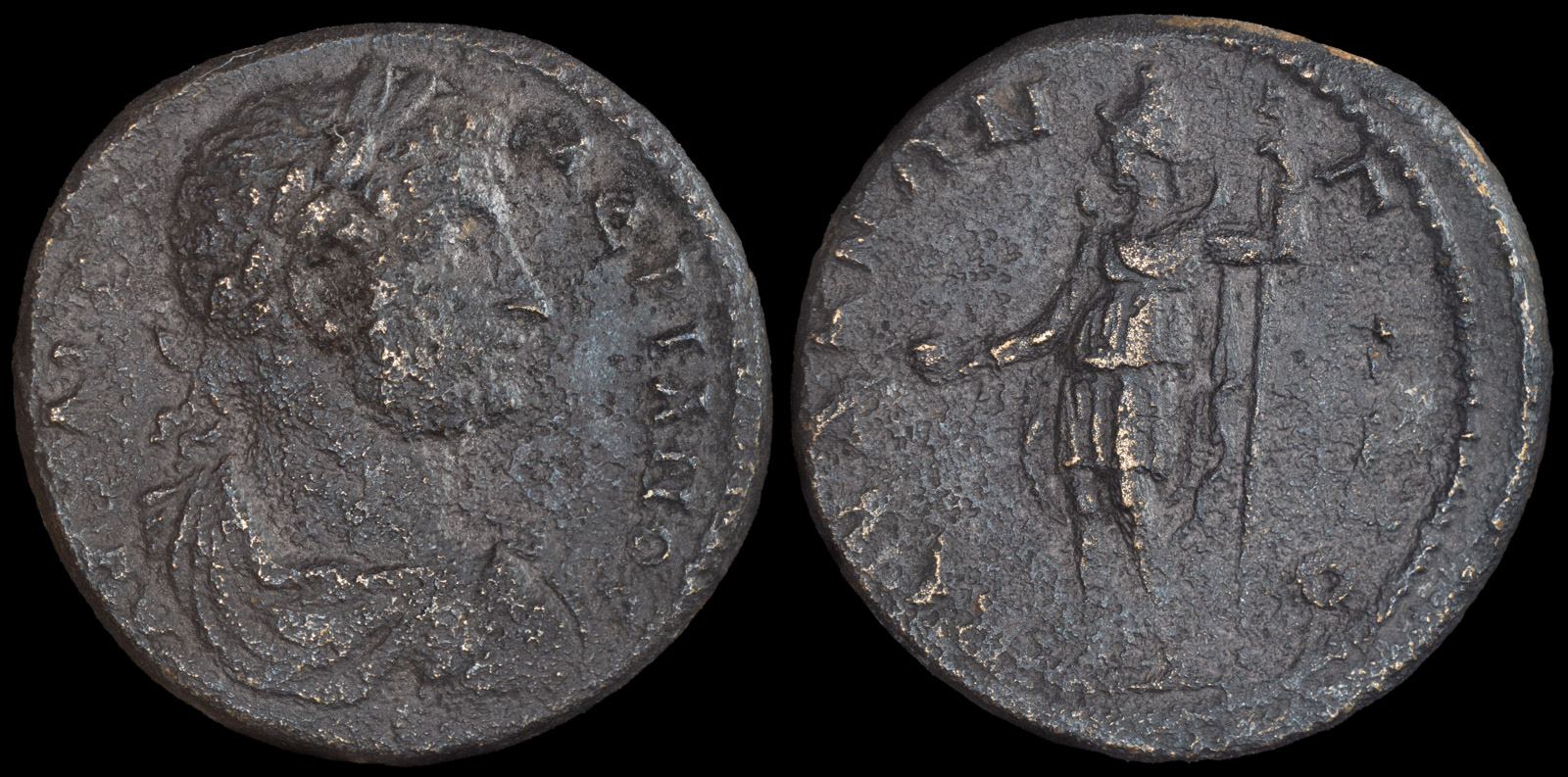
Phrygia, Palaeobeudus
Hadrian, 117-138 CE
AE 4.92g 21.04mm
Obv: AV ΚΑΙ ΤΡΑ ΑΔΡΙΑΝΟС. Laureate, draped and cuirassed bust right.
Rev: ΠΑΛΑΙΟΒЄVΔΗΝΩΝ. Mên standing left, holding pine cone and spear.
RPC III 2621; BMC 2
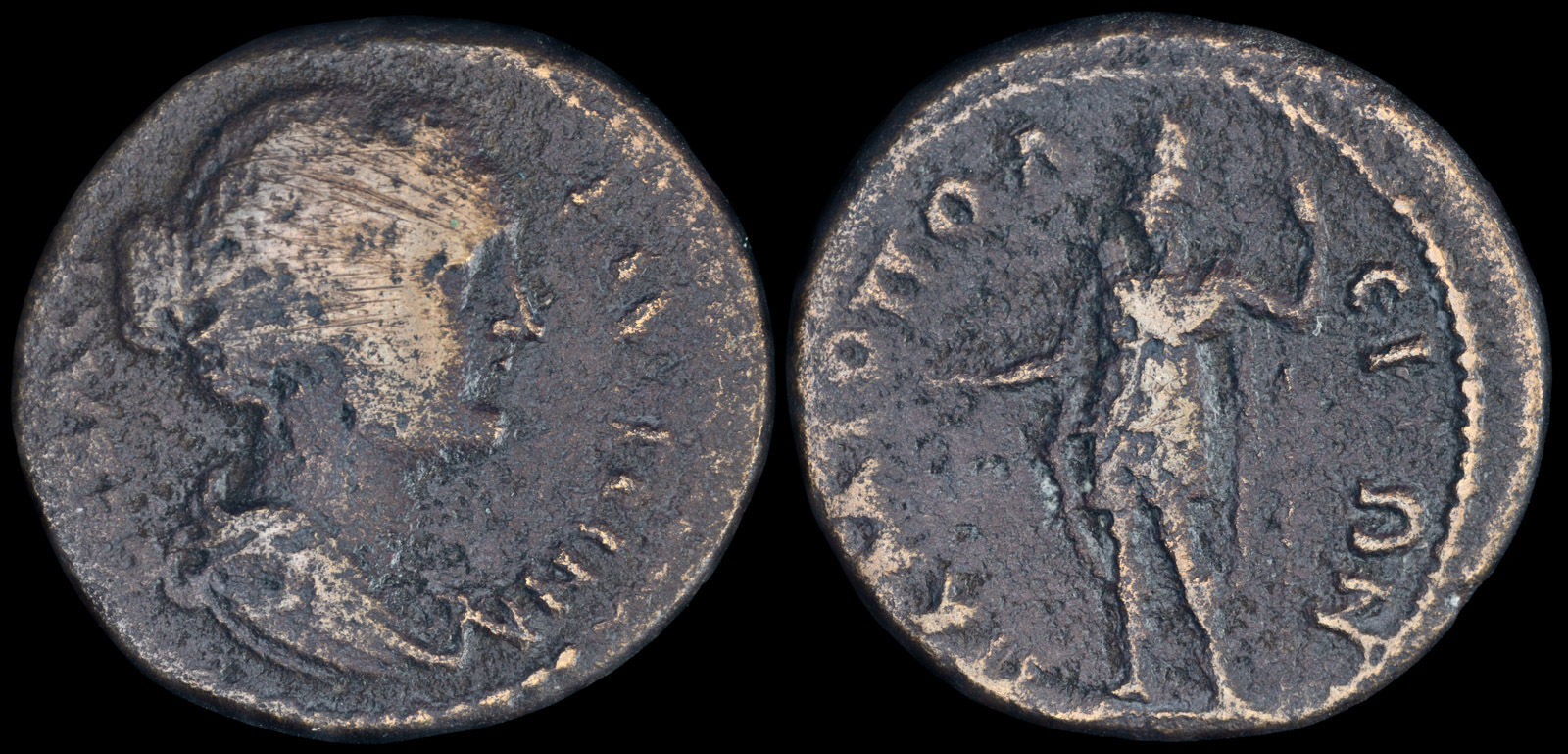
Palaeopolis, Lycia
Faustina II (147 – 175 CE)
Ae 20.6mm, 5.1g
Obv: FAVCTEINA CEBACT; Draped bust right
Rev: PALAIOPOLEITWN; Mên standing left wearing Phrygian cap, crescent behind shoulders, holding pine cone and scepter
RPC IV online 7692