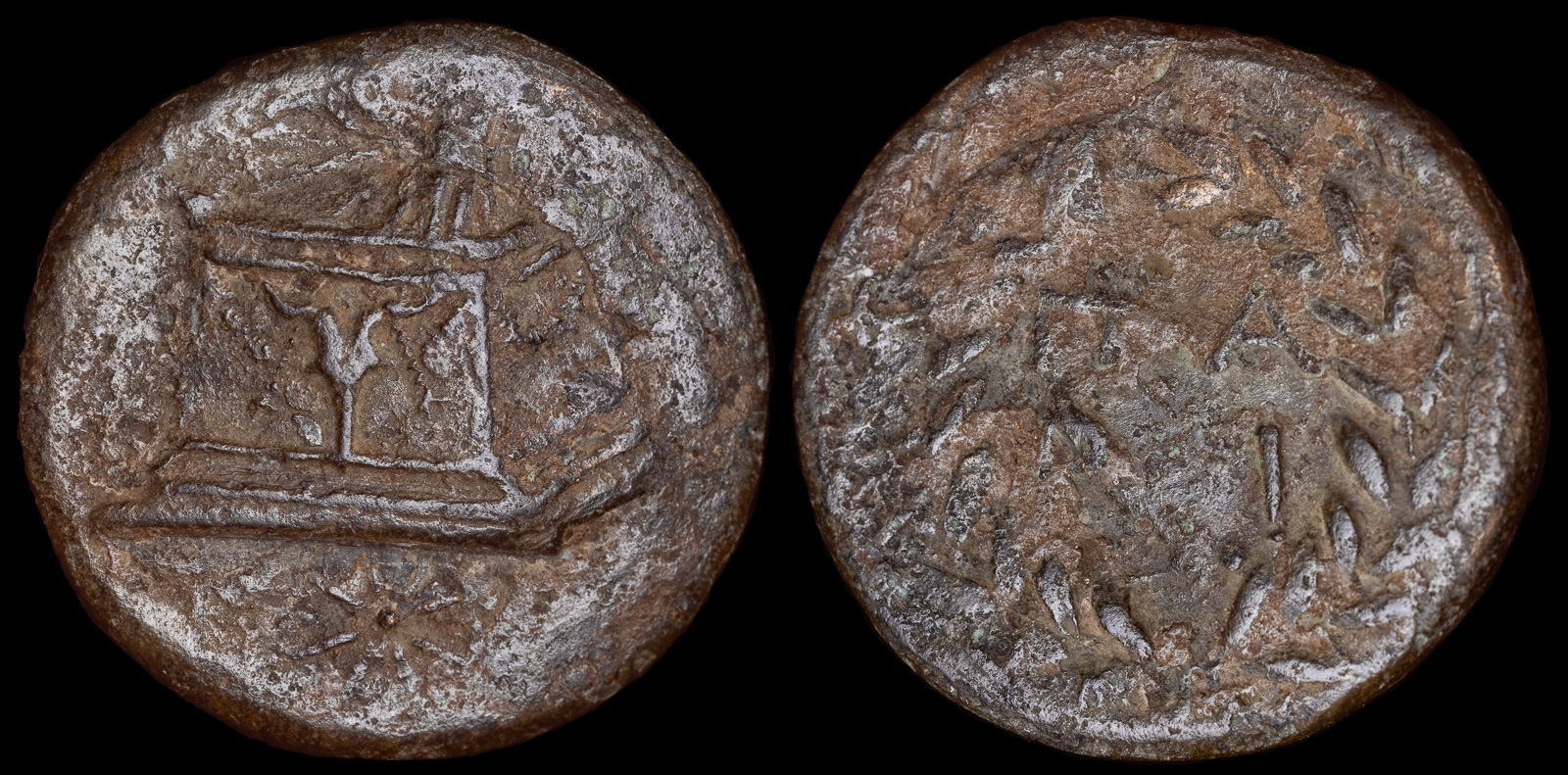
Mysia, Parion
c. 350-300 BCE
Æ 20mm, 4.83g, 12h
Altar ornamented with a boukranion; star below. R/ ΠΑ/ΡΙ within olive wreath
SNG BnF 1396 var. (no star)
Ex London Ancient Coins
Perhaps one of the most impressive monuments in ancient Asia Minor was the Altar of Hermokreon. It was reported by Strabo to be one stadion long, or approximately 187 meters. If true, then only the Altar of Hieron II in Syracuse was larger in the Greek world. The altar was even larger than the Altar of Zeus in Pergamon, part of which can be seen today at the Pergamonmuseum Berlin.
Strabo said (10.5.7):
Thasos was founded by the Parians, as also Parium, a city on the Propontis. Now the altar in this city is said to be a spectacle worth seeing, its sides being a stadium in length; and so is the Parian stone, as it is called, in Paros, the best for sculpture in marble.
He also goes into some details on its construction (13.1.13):
According to Callisthenes, among others, Adrasteia was named after King Adrastus, who was the first to found a sanctuary of Nemesis. Now the city is situated between Priapus and Parium; and it has below it a plain that is named after it, in which there was an oracle of Apollo Actaeus and Artemis. . . . But when the sanctuary was torn down, the whole of its furnishings and stonework were transported to Parium, where was built an altar, the work of Hermocreon, very remarkable for its size and beauty; but the oracle was abolished like that at Zeleia.
Vedat Keleş, in his paper “Some Observations on the Altar of Hermokreon in Parion”, mentions the inconsistency between the numismatic dating of these coins in the 4th century BCE. Today, we know that Hermokreon was an architect under Eumenes II. It’s therefore impossible that the Altar of Hermokreon was built in the 4th century BCE. The logical answer is the coins must date from later – the 2nd or 1st centuries BCE. This altar thus dates to a similar time as that in Pergamon.
To date, archeological digs in Parion have found no evidence of the altar. From coins, though, we know it had an unusual shape, being more rectangular. This contrasts with the Altar of Zeus in Pergamon, which was “U” shaped, and the Altar of Hieron II, which was “I” shaped. If the general shape suggested in the coins is correct, along with Strabo’s size, then the area of the Altar of Hermokreon was far larger than either of the others.
Being such an impressive building, it was well-represented on Parion’s coinage. Perhaps the most interesting is the three-dimensional view that depicts its unusual shape, along with a bukranion on one side. The bukranion may have been a symbol of animal sacrifice, or it may have had a deeper connection to the original altar at Adrasteia.
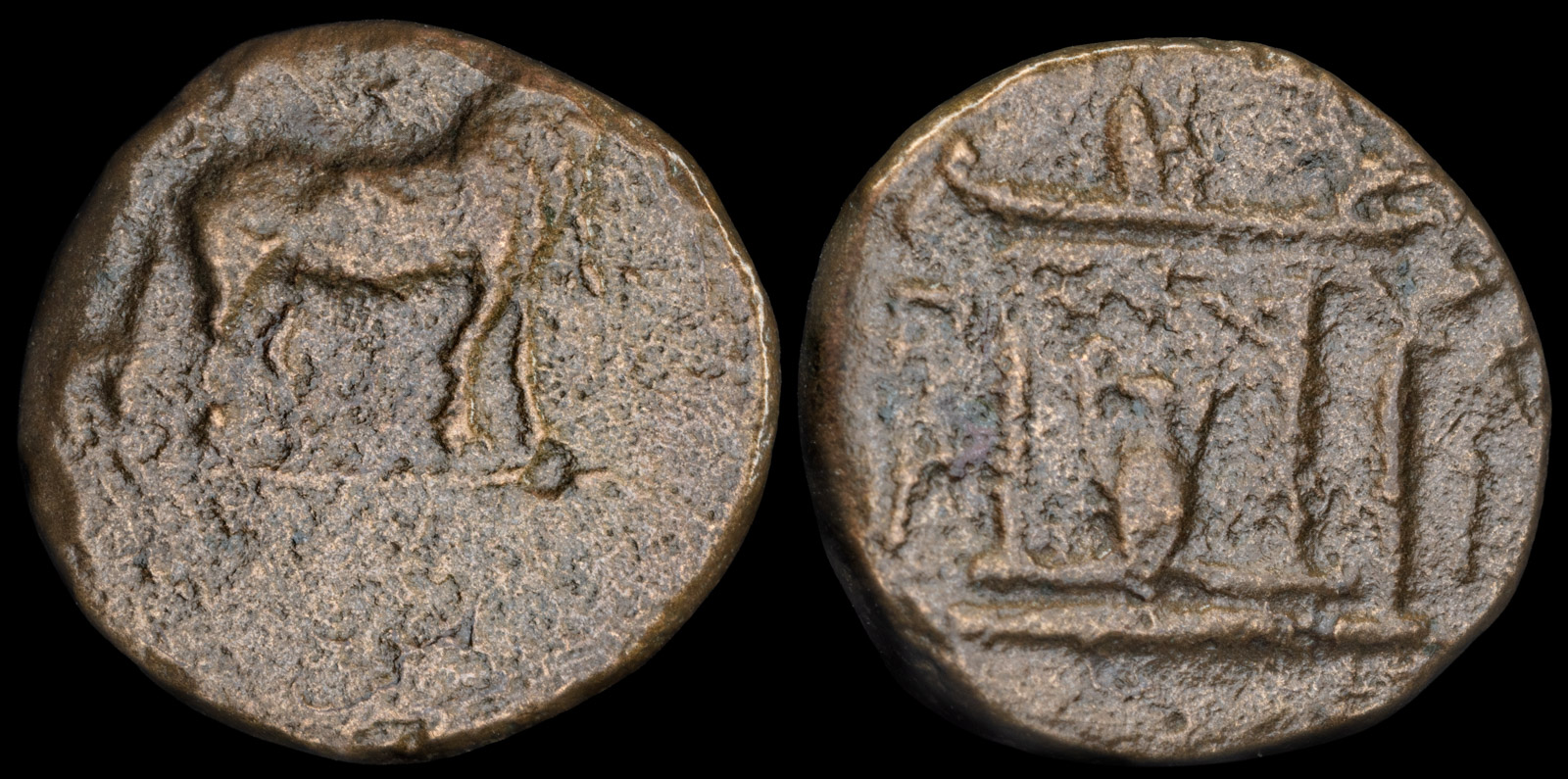
Mysia, Parion
circa 2nd century BCE
Æ 10mm, 1,11g
Obv: Bull standing right.
Rev: ΠΑΡΙ. Altar of Parion, garlanded and lit; before, amphora.
SNG Arikantürk 674-6
The side view of the altar with an amphora in front may strengthen the animal sacrifice theory, since it may have symbolized libations given before, during, and after the sacrifices. The coin also presents a very different view of the altar.
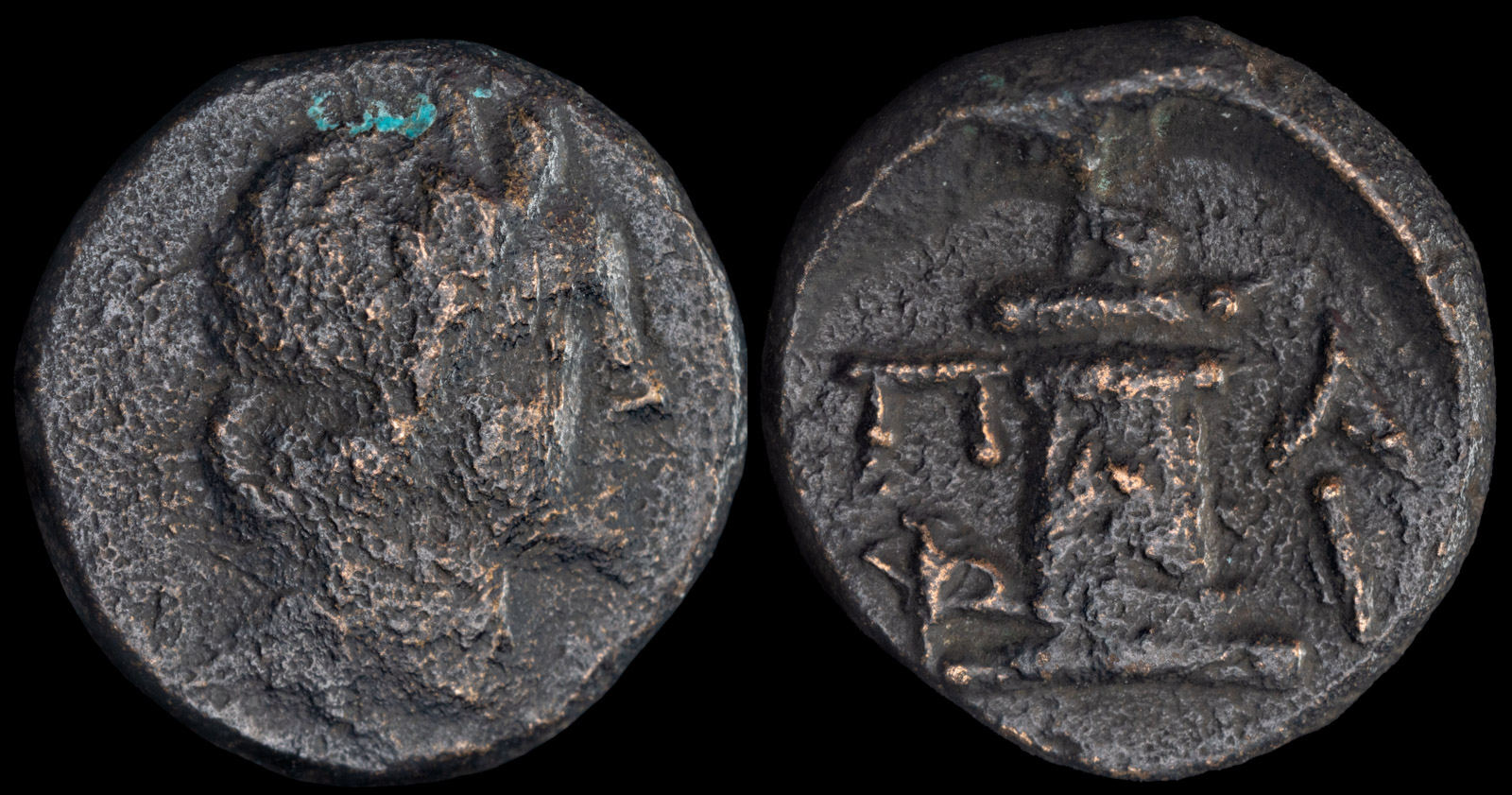
Mysia, Parion
2nd-1st centuries BCE
Æ 12mm, 1,95g
Obv: Laureate head of Apollo right.
Rev: ΠΑ / ΡΙ. Lighted and garlanded altar.
Cf. BMC 75
A rare depiction of the altar is this coin, which suggests that there were staircases on each side, and the actual raised portion was narrow and long. When the three are put together, they depict a rectangular base with a staircase on each side. In the middle was a raised section that was considerably longer than wide and consisted of several columns (if Strabo’s size is correct, there would have been a large number of them). While the three-dimensional view suggests walls, the other coins suggest that wasn’t the case. Strands were hung between the columns, one of them with a Bukranion.
There was a roof, on top of which was some sort of pillar. I do wonder if it was a baetyl, commonly used for worship in Anatolia.
The presence of a bull on the obverse of one of the coins, along with a bukranion on the altar itself, suggests that they must have been one of the main sacrificial animals. Descriptions of the last coin place Apollo on the obverse, which would suggest that the worship of Apollo at the original altar in Adrasteion continued after it was moved to Parium. Presumably Artemis was also worshipped, and to my eyes the portrait on the obverse looks female.
Today, our only knowledge of the Altar of Hermokreon comes from Strabo and these coins. Given the combination of different views and what little Strabo told us, we can begin to create a picture of its layout and usage. Perhaps someday archeologists will find the base of the actual structure and we’ll know more.