Punic
View All Tags
The Punic script was an alphabet derived directly from the Phoenician writing system. Like other early Semitic scripts, it was written from right to left and primarily recorded consonants, leaving most vowels unmarked. Over time, the script evolved into several regional forms. The earliest inscriptions closely resemble those found in the Phoenician homeland, but later Carthaginian inscriptions developed more cursive and simplified letter shapes. A particularly late form, known as Neo-Punic, appeared after the destruction of Carthage by Roman Republic in 146 BCE and shows both graphical innovations and increasing influence from local North African cultures.
Despite the fall of Carthage following the Third Punic War, the Punic language did not disappear immediately. It continued to be spoken for centuries under Roman rule. Ancient writers, including Augustine of Hippo in the fourth and fifth centuries CE, mention Punic-speaking communities in North Africa. Evidence from inscriptions suggests that Neo-Punic remained in use alongside Latin, especially in rural regions. Some scholars believe that Punic survived in certain areas until at least the sixth century CE, although the exact date of its extinction remains uncertain.
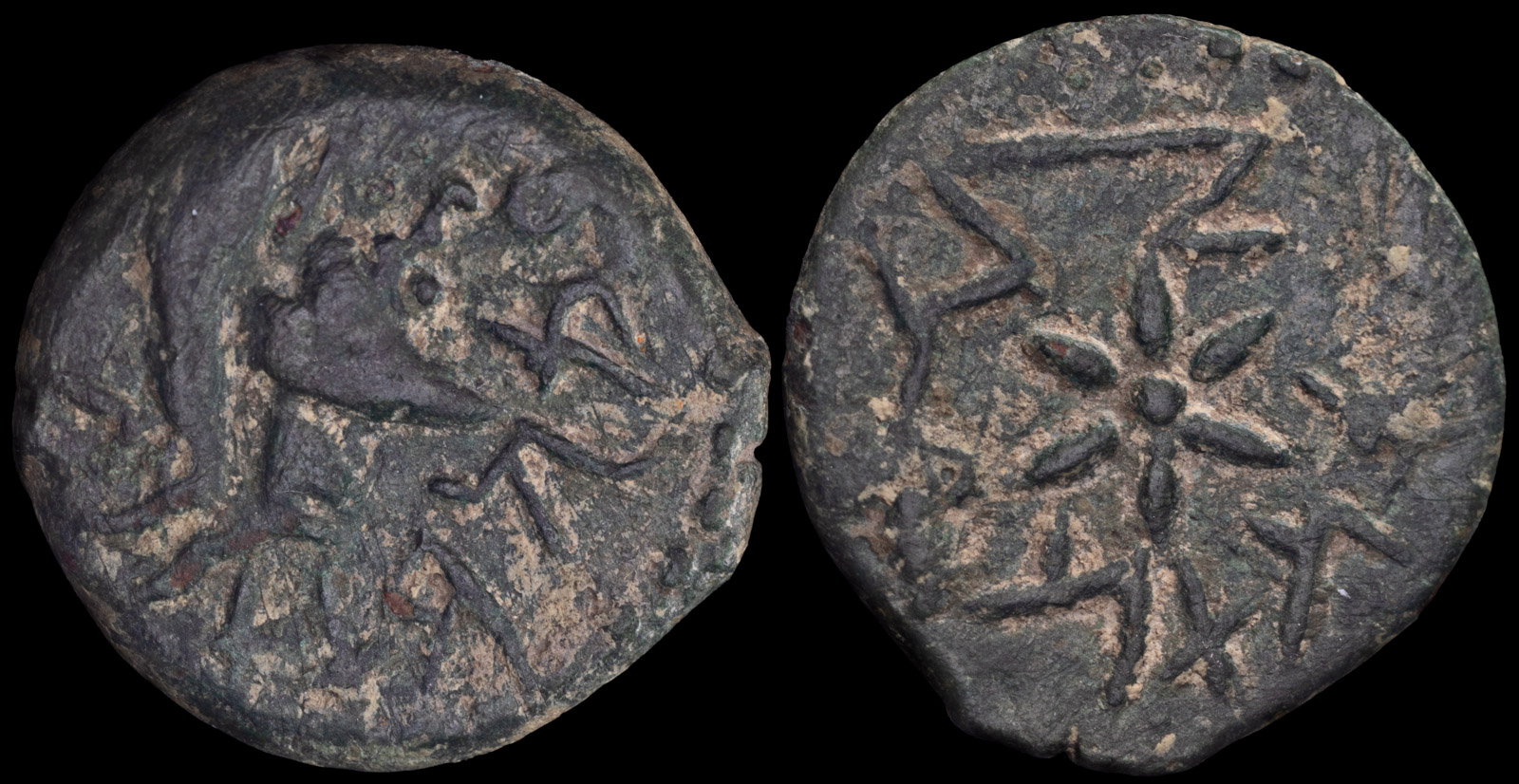
Mauretanian Kingdom. Bocchos I or II
ŠMŠ (Volubilis?) mint
Circa 118-80 or 49-33 BCE
AE 16mm 2.69g
Obv: Neo-Punic legend [BQS HMMLKT], bearded head to right.
Rev: six-pointed star flanked by grape bunch to left and ear of corn to right; zig-zag design above, Neo-Punic legend ŠMŠ below.
MAA 45; Mazard 113 (Lixus mint)
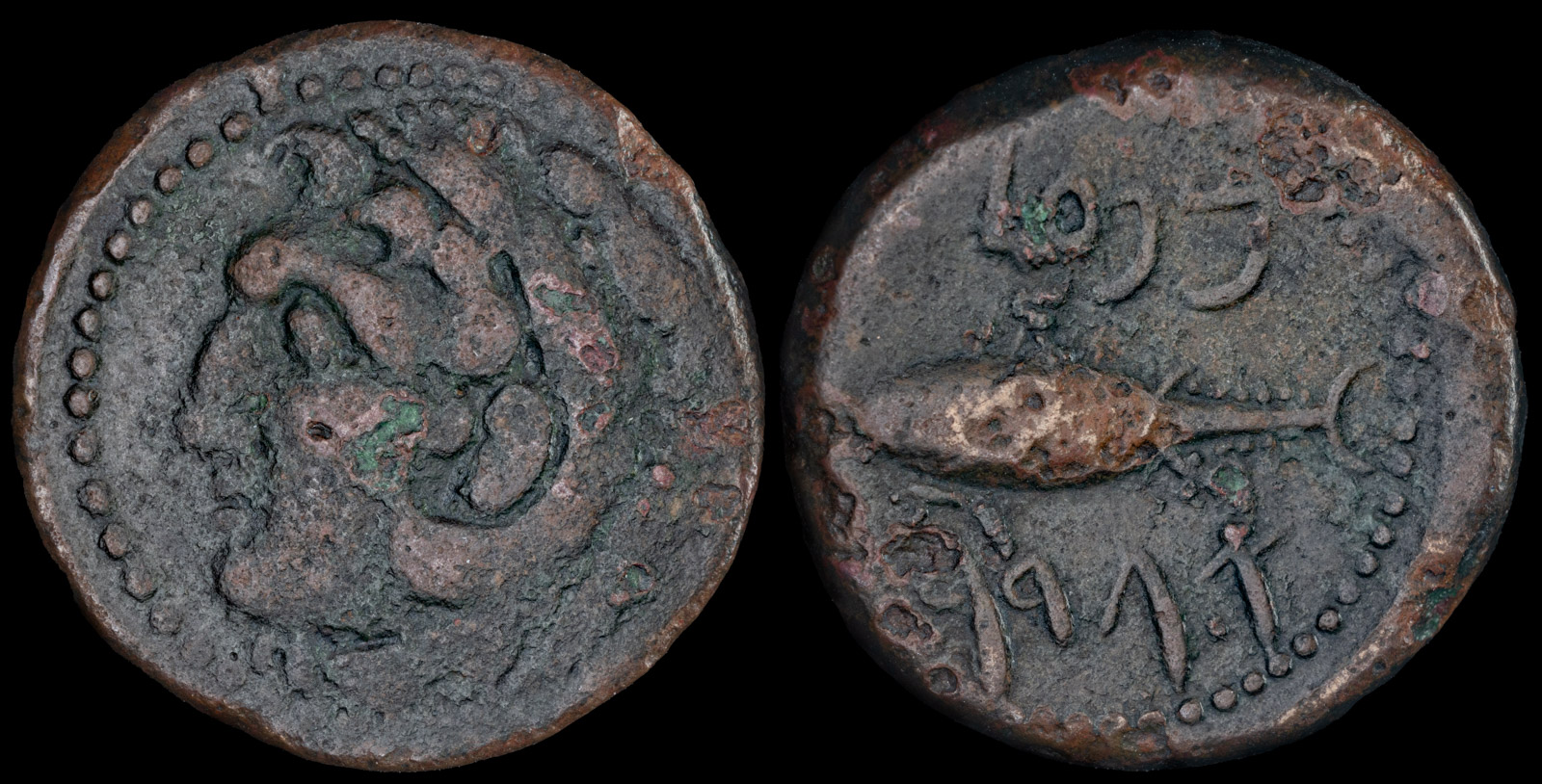
Gades, Spain
100 – 20 BCE
Ae Semis 20.4mm, 6.4g
Obv: Head of Melkart left wearing lion-skin
Rev: Tuna left, Punic legends above and below
FAB 1346; Heiss p. 348 No. 19
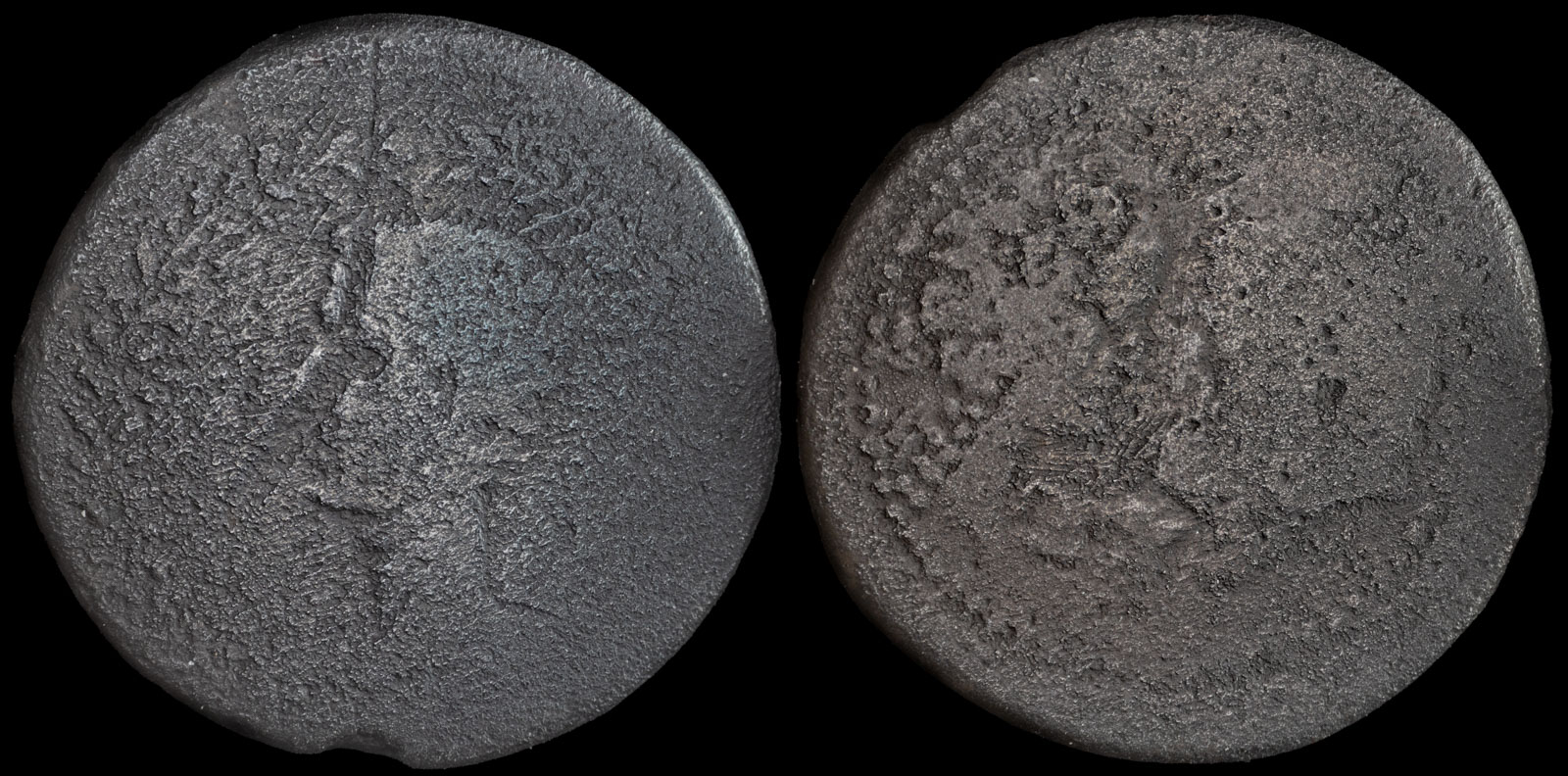
Syrtica, Leptis Magna
Augustus. 27 BCE – 14 CE
Æ Dupondius 33mm, 19.45g, 8h
Bare head of Augustus left within laurel wreath /
LPQY in neo-Punic across field, busts of Dionysus-Shadrapha wearing taenia and ivy-wreath vis-à-vis bust of Herakles-Milk-Ashtart wearing taenia and lion’s skin tied around his neck.
RPC I 842; MAA 11; Müller 14