Fillet
View All Tags
The association between Aphrodite and adornment made the fillet particularly meaningful in her worship. Unlike martial deities whose sacred objects emphasized power or protection, Aphrodite’s rites often highlighted beauty, attraction, fertility, and harmonious social bonds. Fillets could therefore function both as ritual markers and as decorative ornaments enhancing the grace of the wearer. Literary and artistic evidence from ancient Greece frequently depicts women, attendants, and celebrants crowned or bound with ribbons and fillets in contexts linked to love and festivity. Such adornments reflected the goddess’s domain over physical beauty and erotic charm while simultaneously indicating reverence and ritual purity.
Fillets were also attached to sacred offerings presented at Aphrodite’s altars. Animals prepared for sacrifice were often decorated with ribbons or woolen bands before the ritual began, marking them as dedicated to the deity. Statues, temple furnishings, and cult images could likewise be adorned with fillets during feast days. These acts transformed ordinary objects into sacred possessions under the goddess’s protection. In some ceremonies, garlands of flowers were combined with fillets, reinforcing Aphrodite’s connection with blooming vegetation, sensual abundance, and the generative powers of nature.
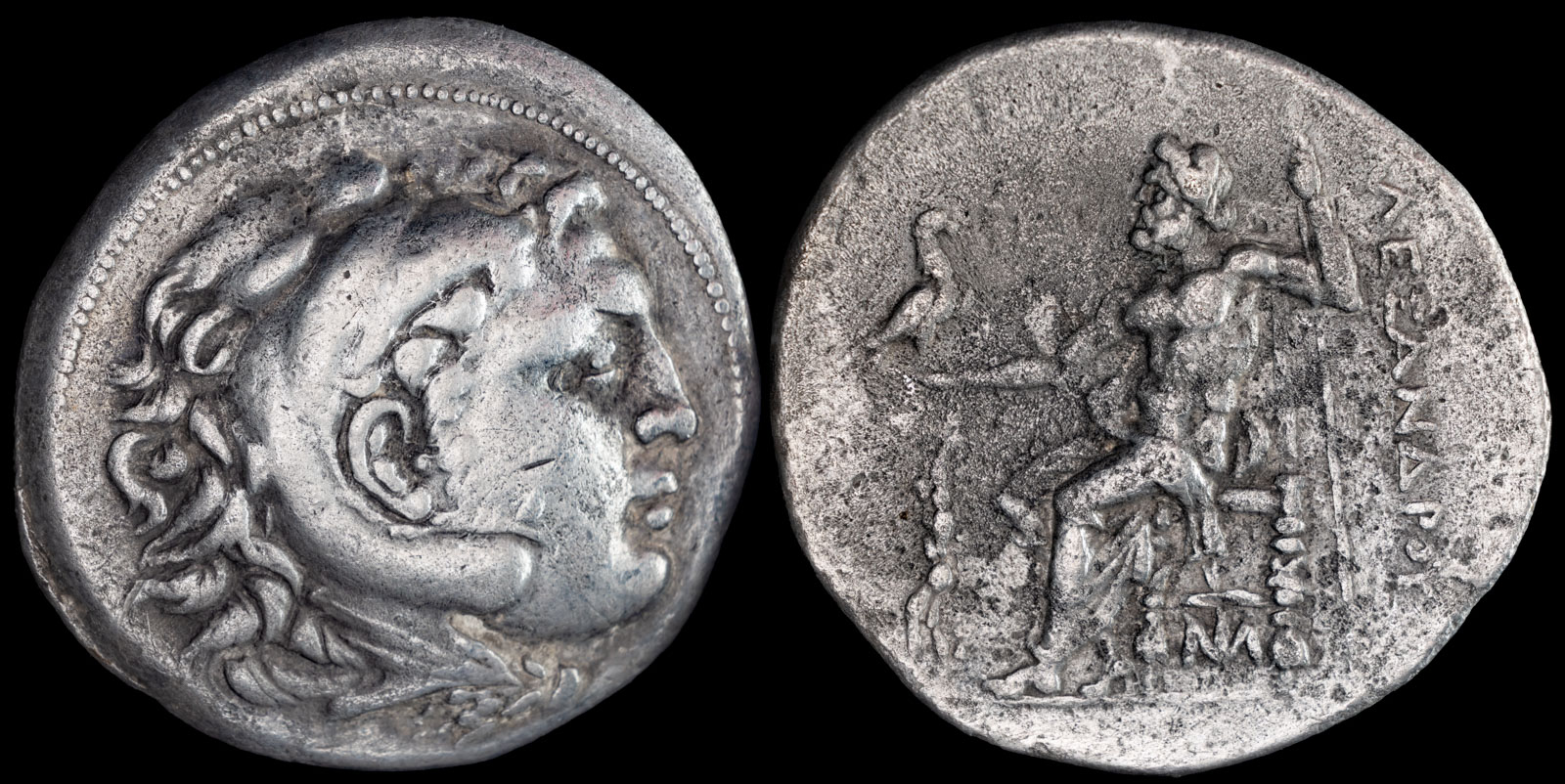
Sikyonya, Sikyon
circa 225-215 BCE
AR silver tetradrachm 31mm, 16.4g
Head of Herakles right, wearing lion skin.
Reverse – Zeus Aëtophoros seated left; Youth holding fillet standing left; TM monogram below throne.
Price 725; HGC 5, 254