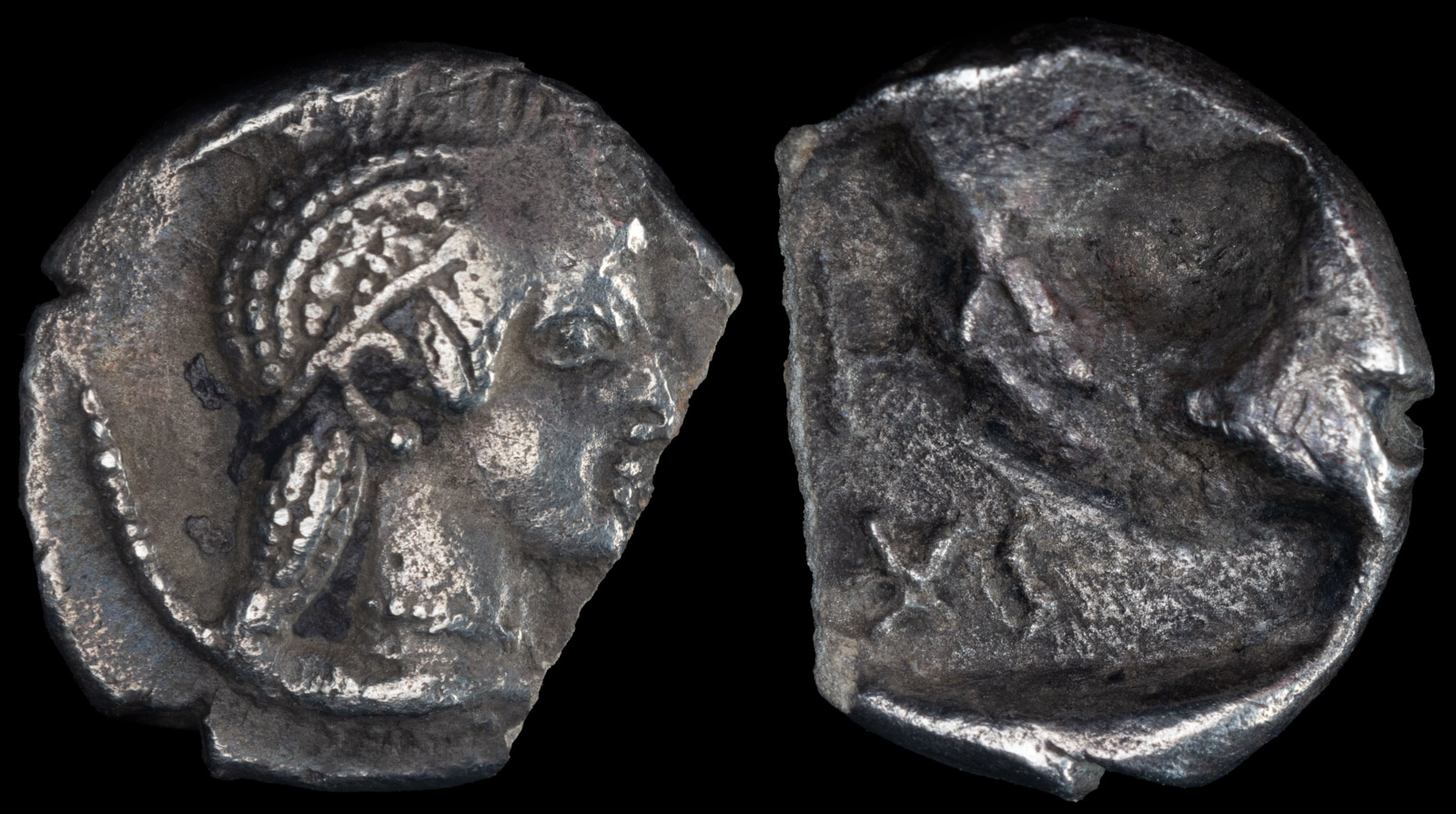
Philistia, Askalon
5th-4th century BCE
AR Obol .6g 10mm
Obv: Female head right.
Rev: Owl standing right, head facing, within incuse square.
Gitler & Tal III.11O; HGC 10, 505
Askalon is believed to have been settled sometime in the fourth millennium BCE and was already ancient by the time of Alexander the Great, to whom it’s believed the city peacefully surrendered. The city had a long history of trade and went through many stages long before the Greeks arrived.
Today the city is modern day Ashkelon, Israel. Archeology has taken place in its ruins, but less so than other more well-known areas. The ancient ruins are located in an archeological park, and feature the largest dog cemetery found in the ancient world. It contains thousands of dogs buried from the 5th to the 3rd centuries BCE. Most were puppies and may have been sacrifices to Astarte.
Askelon comes under the control of Egypt under Thutmose III
The Egyptians under Merneptah defeat Askelon, which had rebelled
Rough founding of Philistine Aksalon
Askelon captured by the Neo-Assyrian Empire
A rebellion by Askelon is repressed
The Babylonian king Nebuchadnezzar II destroys Askelon
Askelon is destroyed, perhaps by the Ptolemies
Antiochos III captures Gaza and Askelon
Askelon begins its own calendar, a sign of independence
Administration of Askelon moved to the province of Syria