Melqart
View All Tags
In character, Melqart was a complex god who combined aspects of kingship, fertility, and cyclical renewal. Ancient sources describe rituals in Tyre that emphasized death and rebirth, suggesting that Melqart represented the seasonal regeneration of nature and the enduring continuity of the city itself. This regenerative aspect helped explain his enduring popularity among Phoenician merchants and colonists, who carried his cult throughout the Mediterranean as they established trading posts and settlements. Wherever Tyre’s influence reached, Melqart often followed.
As Phoenician colonies encountered Greek culture, Melqart was frequently identified with Herakles. This syncretism was especially strong in the western Mediterranean, where Greeks referred to Melqart as “Tyrian Herakles.” The association drew on shared themes of strength, heroic labor, and boundary crossing, particularly Melqart’s role as a protector of maritime routes and distant frontiers. Sanctuaries dedicated to Melqart, such as the famous temple at Gades modern Cádiz, became important religious and commercial centers, visited by Phoenicians, Greeks, and later Romans alike.
Under Roman rule, Melqart’s identity continued to evolve, often merging into the cult of Hercules while retaining traces of his Phoenician origins. Coins, inscriptions, and literary references preserve this layered religious history, showing how Melqart functioned as a bridge between cultures. His worship illustrates how ancient Mediterranean religion was not static but adaptive, allowing local gods to survive and even flourish by absorbing new meanings as political power and cultural influence shifted over time.
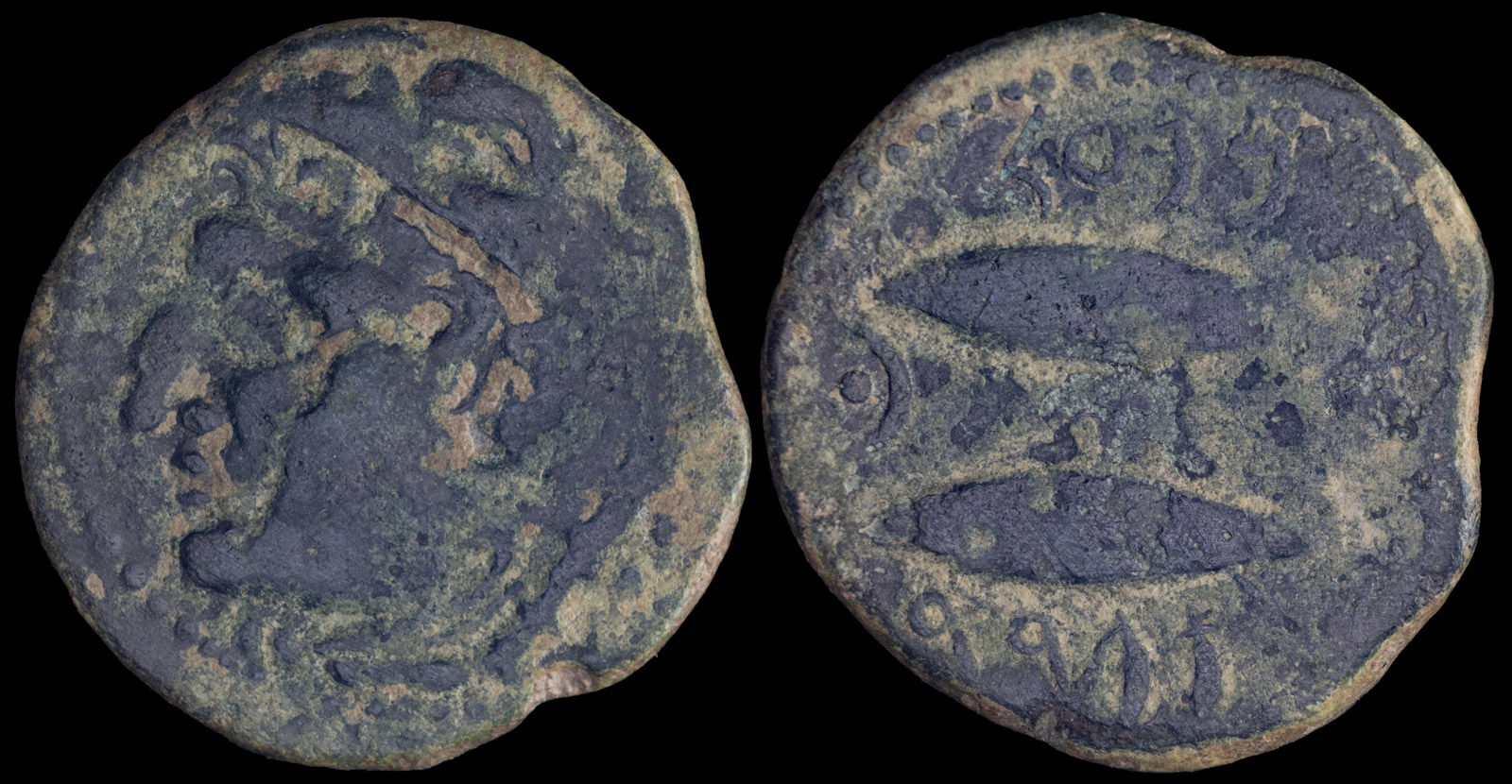
Gades, Iberia
ca. 2nd century BCE
Ae Half Unit 25mm, 8.0g
Obv: Head of Melqart (Herakles) left wearing lion’s skin headdress, club behind
Rev: Two tunnies left with crescent and pellet to left; Iberian legend above, to right and below
SNG BM Spain 228
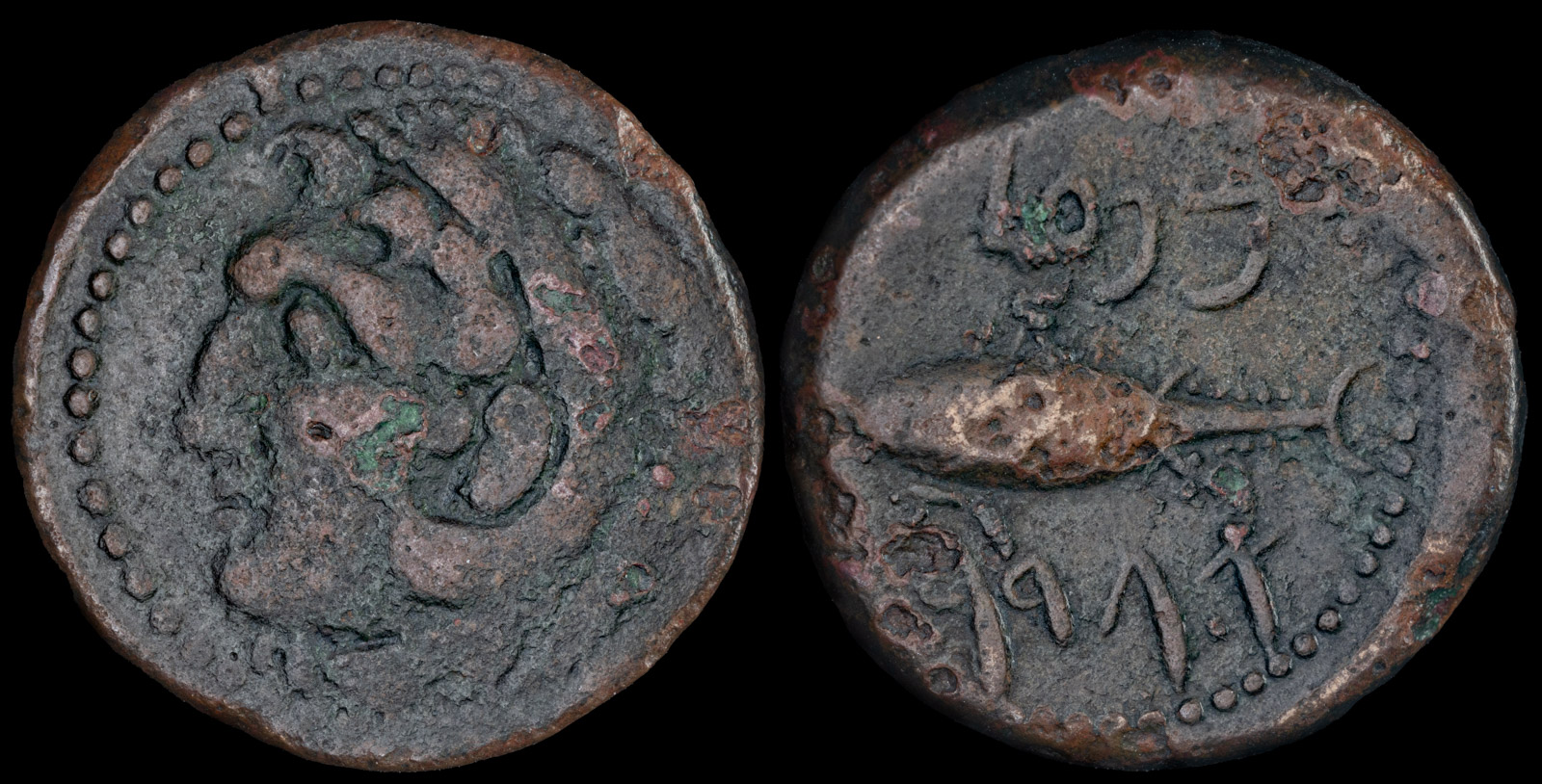
Gades, Spain
100 – 20 BCE
Ae Semis 20.4mm, 6.4g
Obv: Head of Melkart left wearing lion-skin
Rev: Tuna left, Punic legends above and below
FAB 1346; Heiss p. 348 No. 19
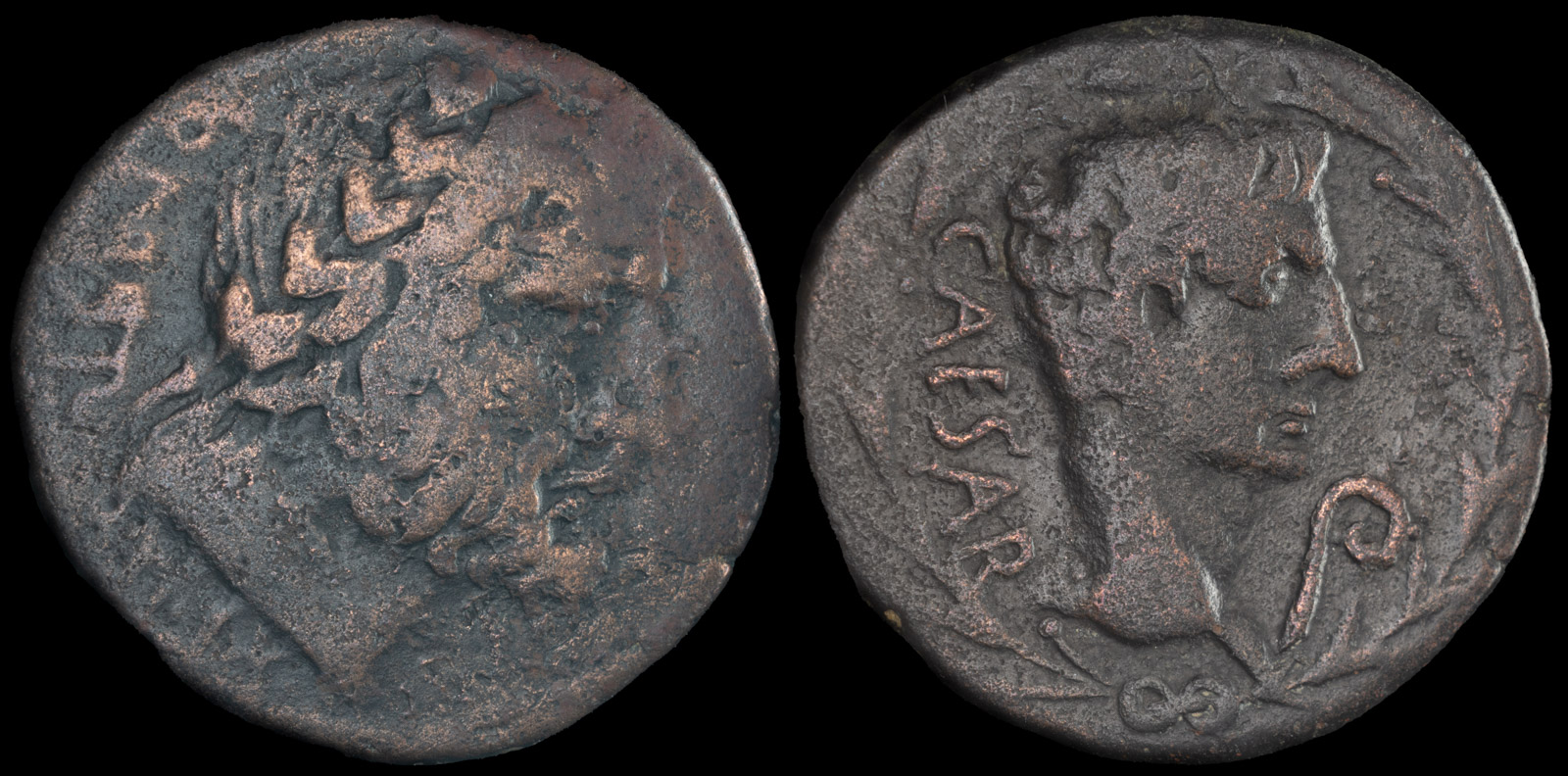
Syrtica, Sabratha
Augustus 27 BCE – 14 CE
AE 15.69g 30mm
Laureate head of Baal-Melqart right “MNSY” below and “SBRTN’N” to left, both in Neo-Punic.
Head of Augustus right “CAESAR” to left, lituus to right, all within a wreath.
RPC 813