Crocodile
View All Tags
The most famous example appears on the coinage of Octavian, later Augustus, commemorating his victory over Mark Antony and Cleopatra. These coins often show a crocodile chained or tethered to a palm tree, accompanied by the legend AEGYPTO CAPTA meaning “Egypt Captured.” The chained crocodile is crucial to the message. Egypt is no longer independent, dangerous, or untamed. It has been subdued, restrained, and brought under Roman control. The imagery reassured Roman citizens that a once powerful and foreign kingdom was now firmly incorporated into the Roman world.
Symbolically, the crocodile also carried connotations of danger and chaos. In Egyptian religion it could be associated with the god Sobek, a deity linked to the Nile’s fertility but also to raw power and aggression. By depicting the crocodile in a state of submission, Rome was asserting not only political dominance but cosmic order. The Roman state, embodied by Augustus, had imposed stability over what was perceived as an unpredictable and potentially threatening force.
Finally, these coins functioned as mass propaganda. Circulating throughout the empire, they reminded soldiers, merchants, and citizens alike of Rome’s triumph and of Augustus’s legitimacy as ruler. The crocodile, once a symbol of Egypt’s natural and religious identity, was transformed into a visual trophy.
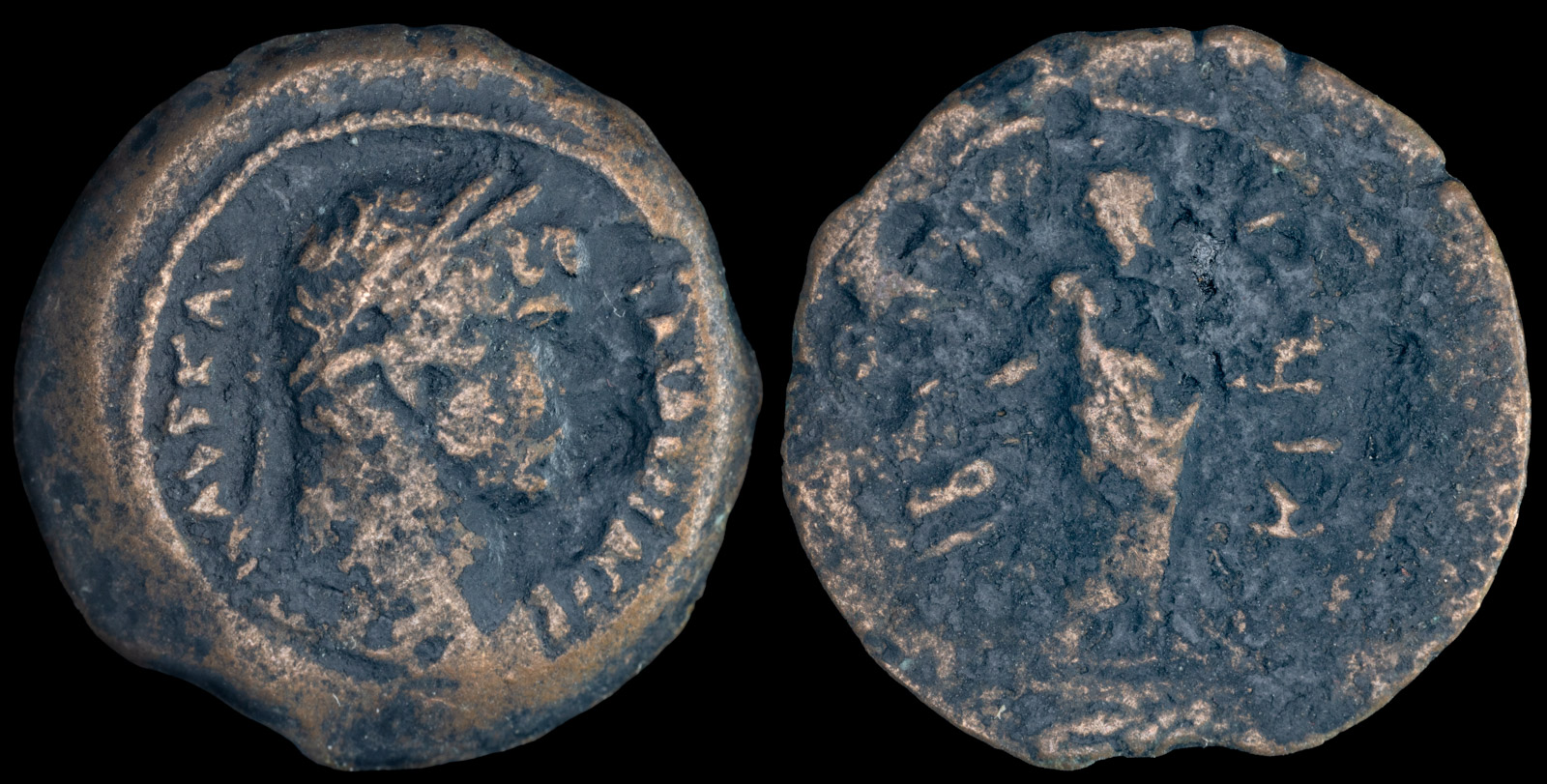
Libya Nome, Egypt
Hadrian 117-138 CE
AE obol 17mm 3.66g
ΑΥΤ ΚΑΙ ΤΡΑΙ ΑΔΡΙΑ ϹΕΒ; laureate head of Hadrian, right, drapery on left shoulder.
Reverse – ΛΙΒΥΗ, L ΙΑ; Amon-Ra, standing facing, head left, holding ram, right, in left hand, crocodile (?), left, in right hand.
RPC 6452
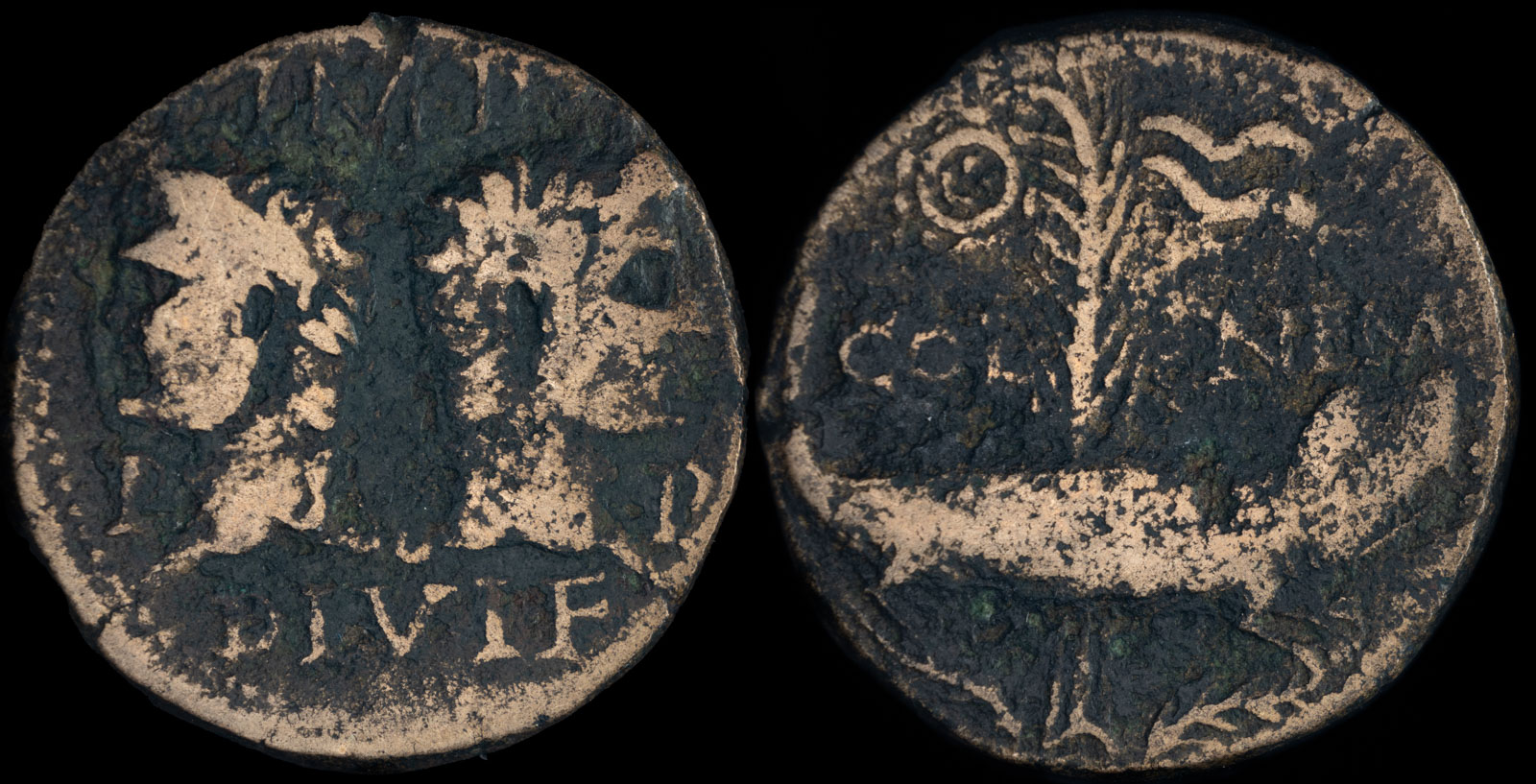
Nemausus, Gaul
Augustua and Agrippa
ca. 27 BCE -14 AE
AE 25.4mm, 12.5g
Obv: Back-to-back laureate busts of Agrippa (on left) and Augustus (on right): IMP above and DIVI F below
Rev: Crocodile to right chained to palm branch, wreath above and palms below; COL-NEM across fields
RIC I 158, RPC I 524