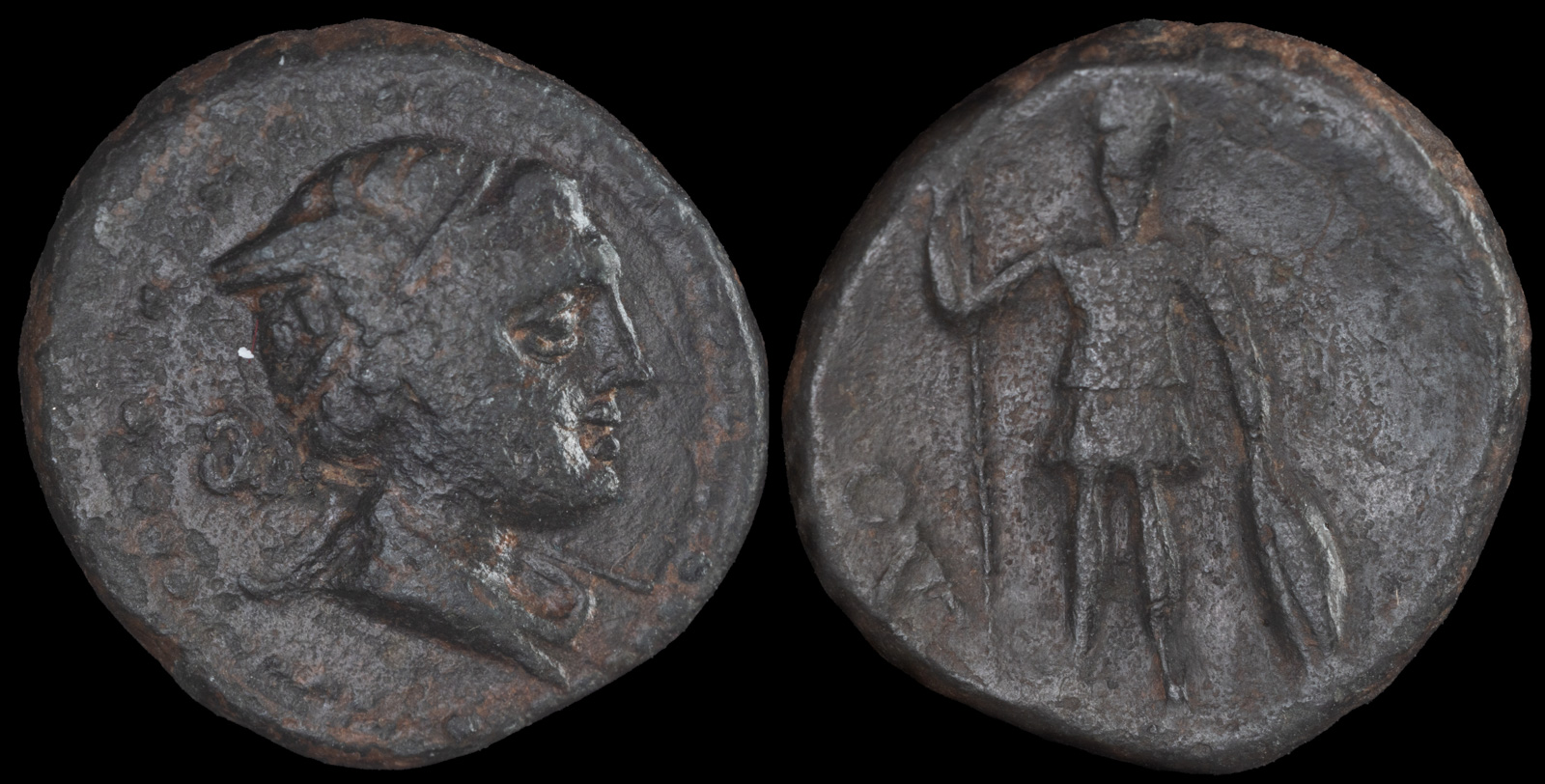
Lycia, Oinoanda
Circa 200 BCE
AE 15.5 mm, 3.65g
Draped bust of Hermes to right, wing above his ear, wearing taenia; kerykeion over left shoulder.
Rev. Ares Tauropleites standing facing, holding spear in right hand and resting left on shield set on ground; to left, o/B.
R. Ashton, “The Coinage of Oinoanda,” NC 2005, p. 75, 4 (A1/P1)
Oinoanda, which from its name is believed to have produced wine, has visitable ruins today. Its origins are far before Greek times, and it was referred to as Wiyanawanda by the Hittites. From 200 to 190 BCE, it was re-colonized by settlers from Termessos. For some time, it was part of a confederation with Kibyra, Bubon, and Balbura, which was dissolved by the Romans in 84 BCE.
Oinoanda is famous today for the inscription of the philosopher Diogenes of Oinoanda. The inscription was massive, filling originally 260 square meters of wall space and containing some 25,000 words. Roughly a third of it has been found and it primarily covers Epicurean doctrines. New parts are still being found today.
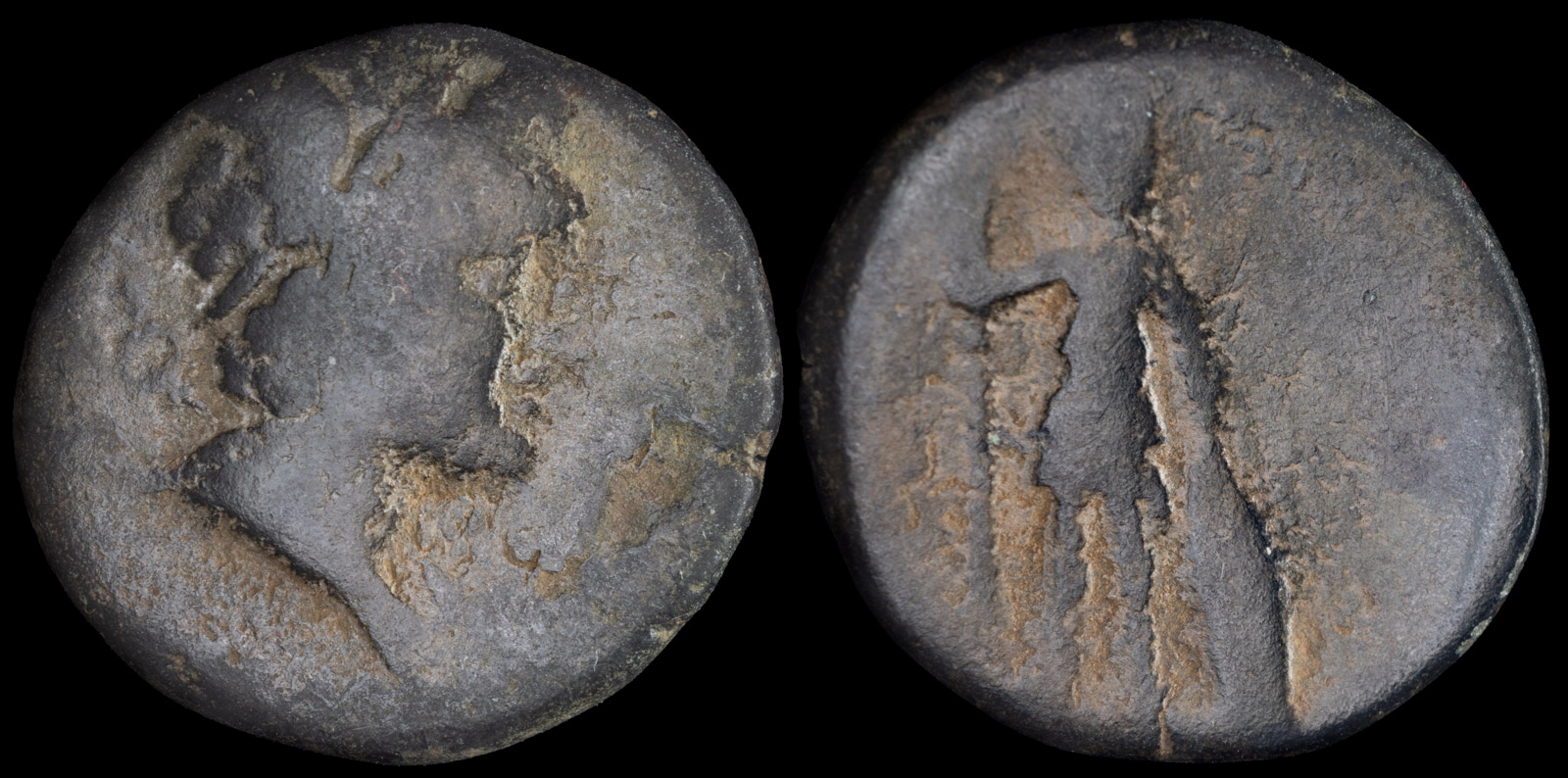
Oinoanda, Lycia
late 2nd Century BCE
Ae unit 17mm, 3.8gms
Obv: Head of Hermes right, caduceus behind shoulder
Rev: Ares standing facing, holding spear and resting left hand on shield at his side [O over A] to left
Unpublished(?)