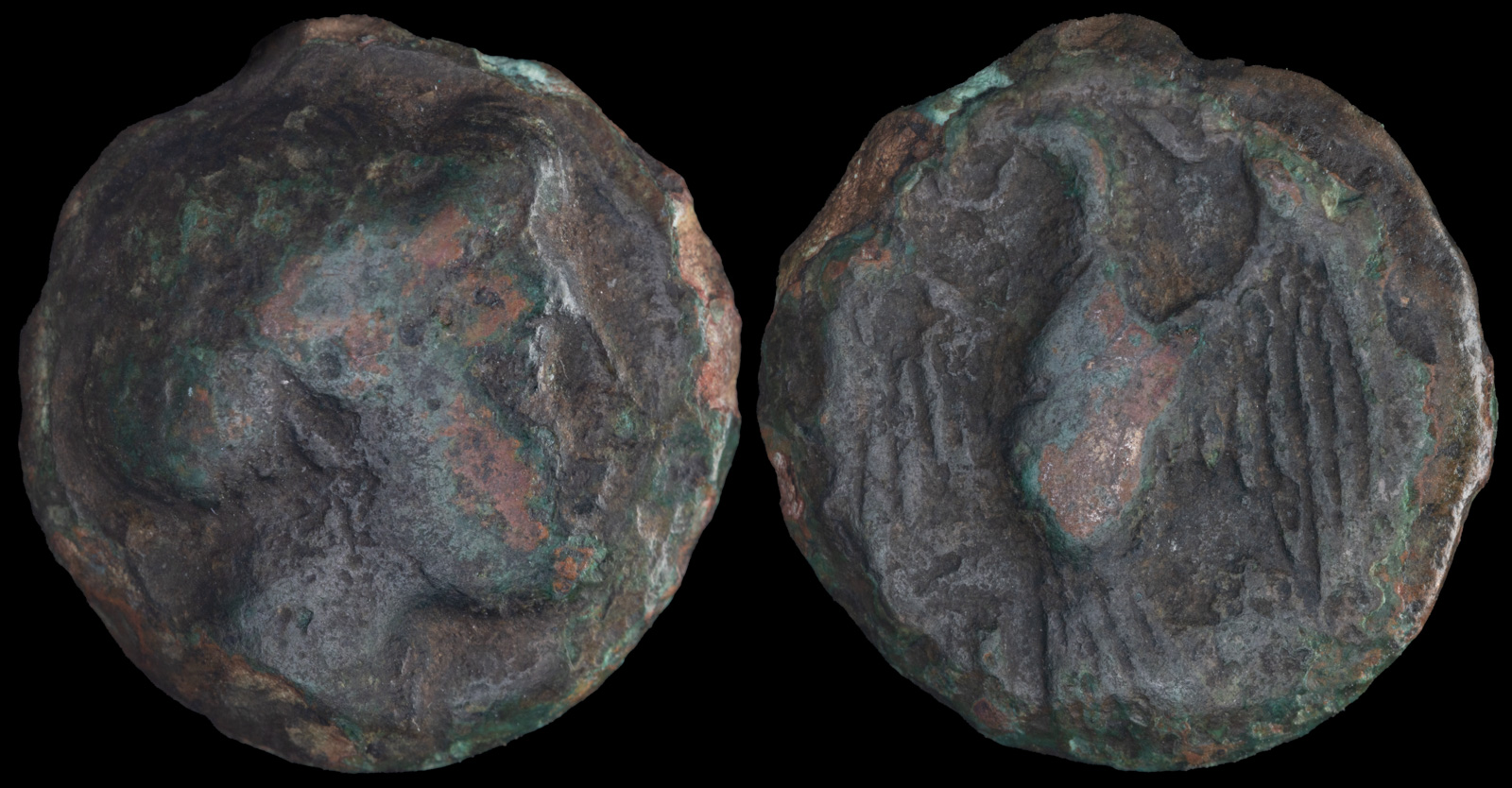
Cyclades, Siphnos
4th century BCE
Dichalkon Bronze, 14mm, 2.61g, 12h
Head of Artemis to right, her hair bound in sphendone
Rev: ΣΙΦ Eagle flying upwards, head to left, holding serpent in beak.
BMC 8-10. HGC 6, 706. SNG Copenhagen 748
Ex Collection of Dr. Paul Probst
Ex Perioikos Collection
Ex Obolos 2021
Ex CNG 2002
In antiquity, Siphnos was famous – and beyond wealthy – for their gold, silver, and bronze. In fact, the majority of Aegina‘s famed turtle coins were minted with Siphnos silver. Thus, for the many who have one (my Aegina examples are all bronze), then there’s a good chance it originated here.
The mines made the island ridiculously rich, and so everyone had the very latest fashions in tripods, cushioned carriages, and purple paint for the kids. They constructed a magnificent treasury in Delphi, the envy of all the Greeks. The city hall was bedecked in Parian marble and the whole place made even Sybaris look common. But the glory wasn’t to last. What happened depends on who you ask.
Pausanias gave this version.
“The Siphnians too made a treasury, the reason being as follows. Their island contained gold mines, and the god ordered them to pay a tithe of the revenues to Delphi. So they built the treasury, and continued to pay the tithe until greed made them omit the tribute, when the sea flooded their mines and hid them from sight.”
In other words, they gave Delphi the middle finger, kept their money to themselves, and thus the mines were flooded. Archeologists have a different story. They believe the Siphnians mined below sea level, which probably isn’t a smart thing to do on an island.
Thus, the mines were kaputt. Down with the water went all their fame and fortune. Their chariots were re-possessed. The marble veneers were sold. Kythnos and Paros stopped talking to them, and their dogs sailed away.
The island had a brief respite with the invasion of Persia by Alexander. The Persians, probably under Autophradates, took charge of Siphnos, only for it to soon switch to Macedonian hands. My guess is that’s around the time when this coin was minted. In many of the smaller cities, it is believed that their limited coinage was minted to pay foreign garrisons.
Of course, Siphnos has a rich numismatic history, mostly in silver. In fact, it was among the first places in the Greek world to mint coins, starting in roughly 600 BCE. However, I can’t hope to afford those, so I’m very happy with my later bronze.
In ancient times, the island boasted two important temples on opposite sides – of Artemis and of Apollo. Their ruins have been found, though unfortunately no sources reveal the epithets. Mine depicts Artemis. Apollo is depicted on some of their earlier silver issues.
Today, the island contains 360 churches, which is a lot for fewer than 3000 people. I haven’t been there, but through collecting all these coins from the islands I’m tempted some day to make a big trip.