Diassarion
View All Tags
The diassarion emerged during the late 1st century CE, a period when the Roman Empire allowed a degree of monetary autonomy to its provinces. While silver denarii and gold aurei served as the primary currencies for larger transactions across the Empire, local bronze coinage like the diassarion was minted to facilitate everyday commerce. These coins often featured imagery tailored to the specific cities or provinces where they were produced, including depictions of local gods, important landmarks, or civic symbols.
The circulation of diassaria declined by the mid-3rd century CE as the Roman monetary system underwent significant changes. The increasing debasement of silver coins like the denarius and the introduction of new coinage, such as the antoninianus, disrupted the established currency system. Additionally, the economic and administrative challenges of the late Empire reduced the production of localized bronze coinage in favor of more standardized issues.
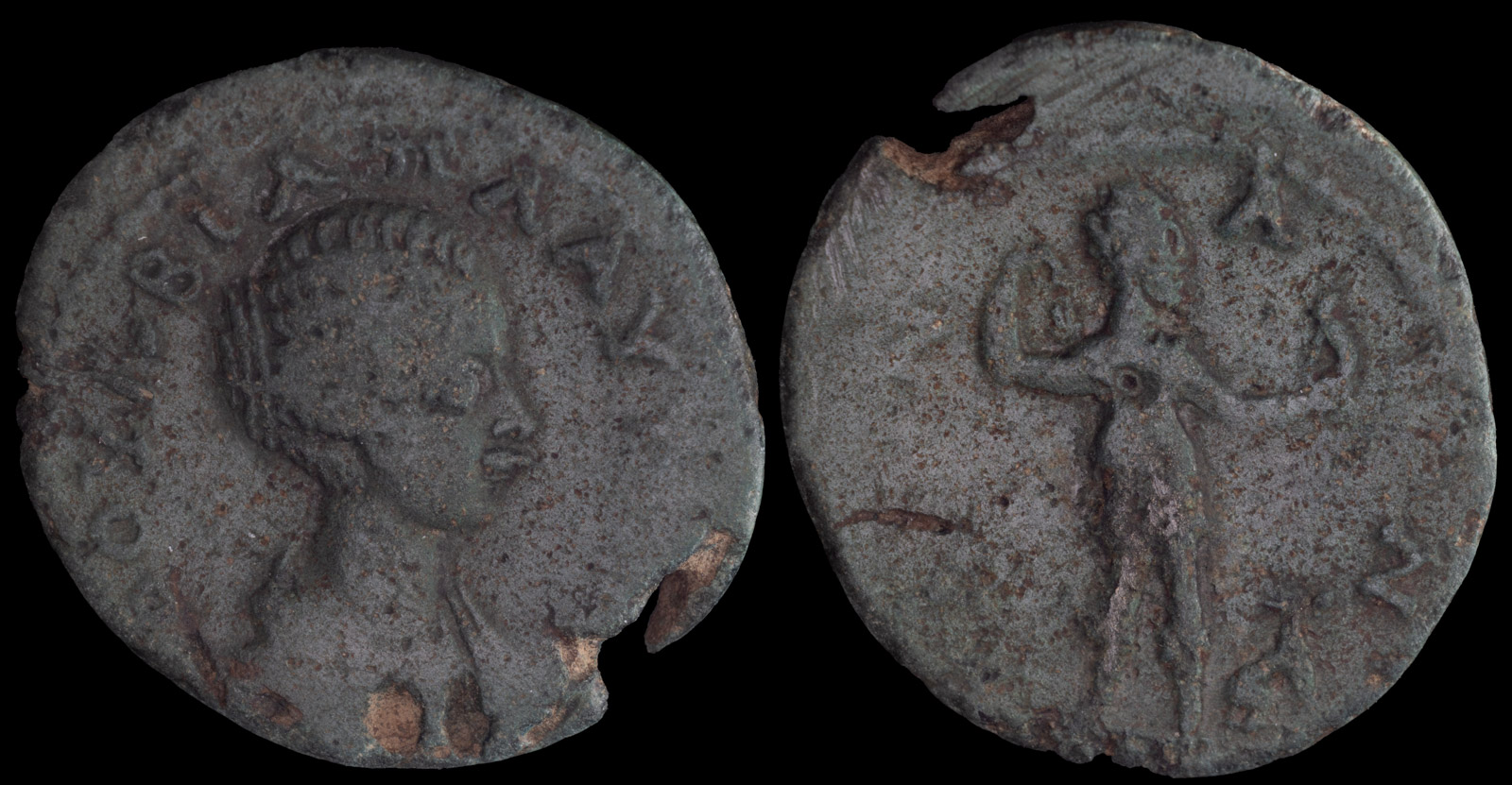
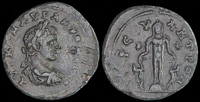
Achaia, Aegira
Plautilla, Augusta, 202-205 CE
Struck under Septimius Severus and Caracalla, 202-205 CE
Æ Diassarion 23mm, 5.17g, 9h
Draped bust right /
Artemis standing right, holding bow and drawing arrow from quiver on right shoulder; at feet right, hound seated right.
Hainzmann 4; Kroll, Bronze –; BCD Peloponnesos 422.1; BMC 6; NCP p. 89. 1, pl. S, IV
Ex Heather Howard Collection
Aigira, Achaia 202-205 CE
Bura, Achaia 197-209 CE
Laerte, Cilicia 98-117 CE
Tarsos, Kilikia 218-222 CE