Phiale
View All Tags
The phiale’s primary use was in the context of religious rituals and sacrifices. It was often used to hold and offer wine, honey, milk, or other liquids to the gods, particularly during sacrifices. The act of pouring a libation was a key component of Greek religious practices, and the phiale was the vessel of choice for this purpose due to its broad, shallow design that made pouring easy. The phiale was also used in household rituals, where it might hold offerings to household gods or to the deceased during commemorative ceremonies.
In addition to its ritualistic use, the phiale could also be employed as a drinking vessel in more casual settings. It was particularly popular in symposia, the drinking parties where Greek men would gather to enjoy wine, music, and conversation. While the phiale was less common for drinking than the kylix or other types of cups, it would sometimes be used in these social settings, especially for sharing wine in a ceremonial or symbolic manner.
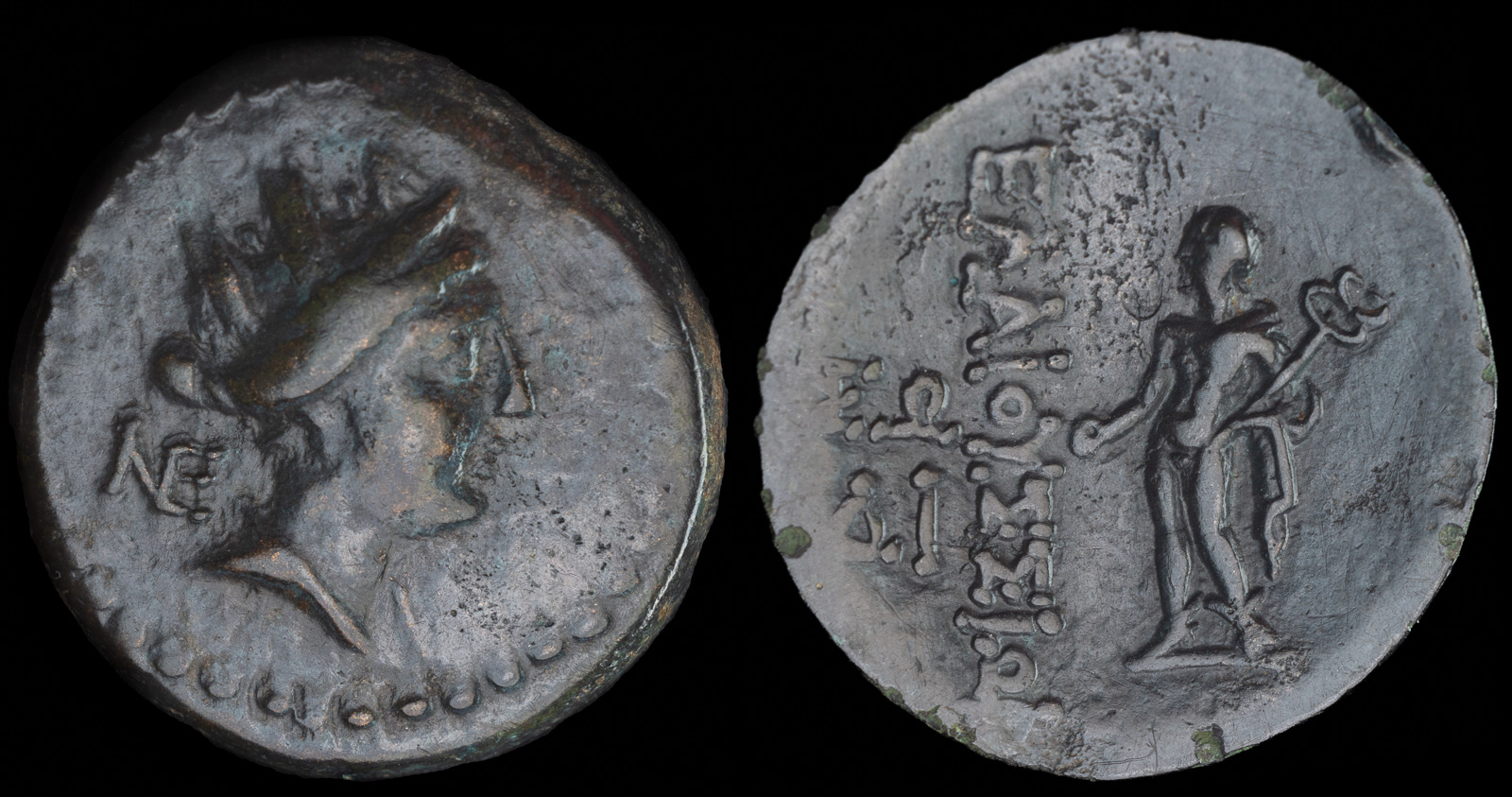
Cilicia, Elaiussa Sebaste
ca 1st century BCE
Æ 18,3mm, 4.6g
Turreted bust of Tyche r.
R/ Hermes standing left, holding phiale and caduceus
SNG Levante Suppl. 222 . cf. SNG France 1153
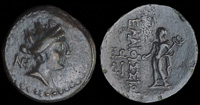
Elaiussa Sebaste, Cilicia 1st century BCE
Imbros, Thrace 350-300 BCE

Mothone, Messenia 198-217 CE
Pautalia, Thrace 147-175 CE