Triskeles
View All Tags
One of the central themes of the triskeles in Greek symbolism is movement and dynamic energy. The three legs or spirals suggest continuous motion, often interpreted as a symbol of the cycle of life, the passage of time, and the interconnection of past, present, and future. The design was frequently used to convey the idea of eternal motion, as the rotating legs or spirals seem to be in perpetual motion, reflecting the Greeks’ fascination with cycles, particularly those of nature and time.
The triskeles also symbolized balance and harmony. The symmetrical arrangement of the three legs or spirals represented a perfect equilibrium, with each part of the design being interconnected and dependent on the others. In this sense, the triskeles could be seen as a reflection of the Greek philosophical ideas about the balance between the physical world, the divine, and the moral or ethical order.
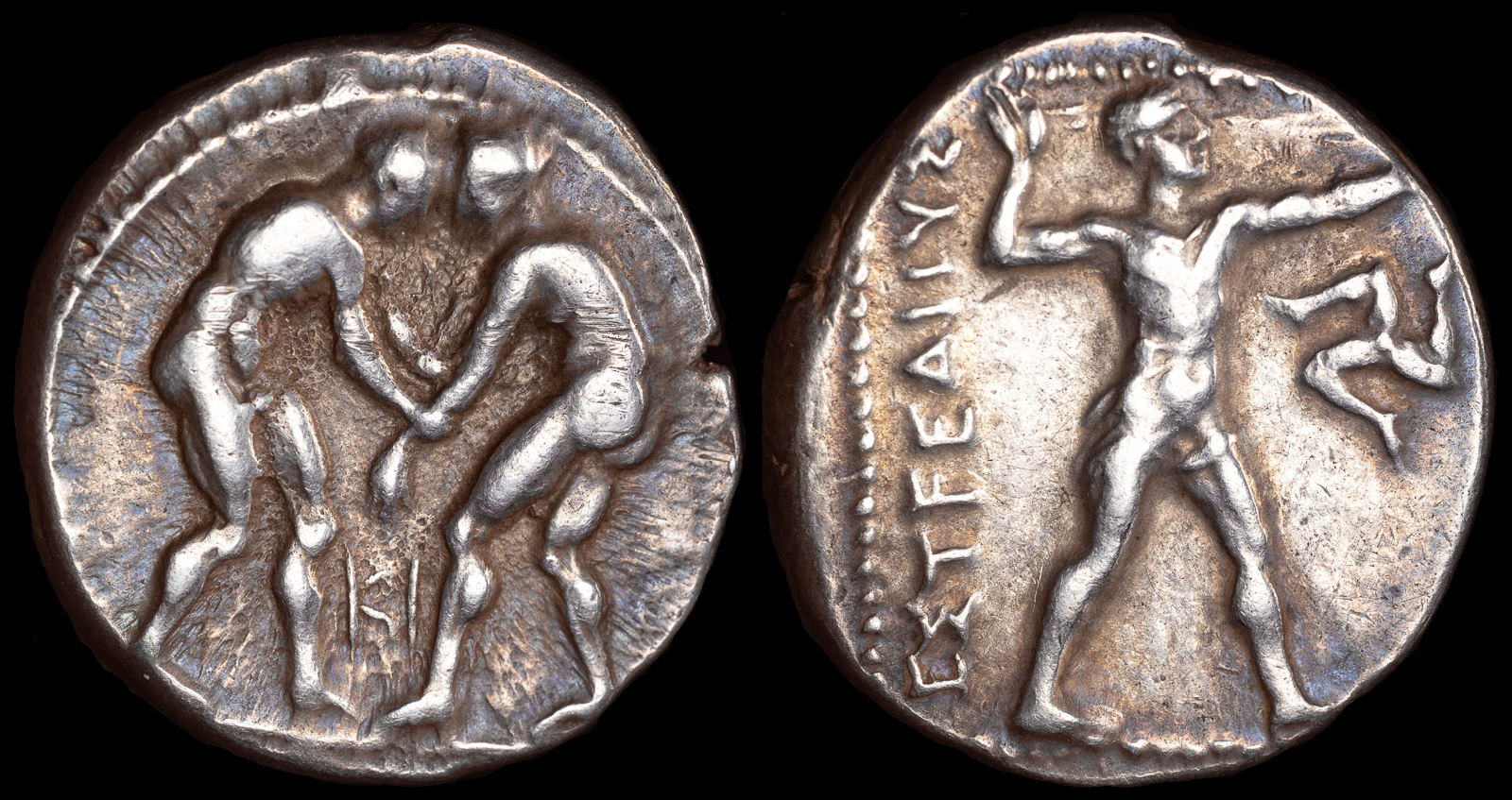
Pamphylia, Aspendos
Circa 380-325 BCE
AR stater, 21mm, 10.78g, 12h
Obv.: Two wrestlers grappling; KI between.
Rev.: EΣTFEΔIIYΣ; Slinger in throwing stance right; triskeles to right; all within pelleted square border.
Tekin Series 4; SNG BN 104
Aspendos, Pamphylia 380-325 BCE
Aspendos, Pamphylia 4th-3rd c. BCE
Iliberri, Iberia 150-20 BCE
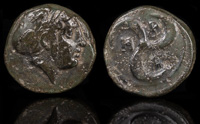
Thebe, Mysia 300-200 BCE