Harpa
View All Tags
In particular, the harpa was commonly associated with Heracles (Hercules in Roman mythology), one of the most celebrated heroes in Greek mythology. Heracles was often depicted wielding a harpa in artistic representations, as he was shown using the weapon to slay monsters or perform the Twelve Labors. This connection to Heracles imbued the harpa with symbolism tied to heroism, courage, and the triumph of good over evil. When featured on coins, particularly those minted by cities or regions that revered Heracles, the harpa functioned as a powerful symbol of divine favor and military success.
In addition to its association with heroism, the harpa also had connections to the agricultural realm, due to its resemblance to a sickle used for harvesting crops. This gave the harpa a dual meaning, symbolizing not only martial prowess but also fertility and the connection between war and sustenance. The harpa’s curved shape, resembling the sickle, reflected the importance of agriculture in sustaining Greek society, suggesting a balance between the need for protection and the nurturing of the land and its people. In this sense, the harpa on a coin could evoke the idea of the defender of the land, a figure who was both a protector and a provider.
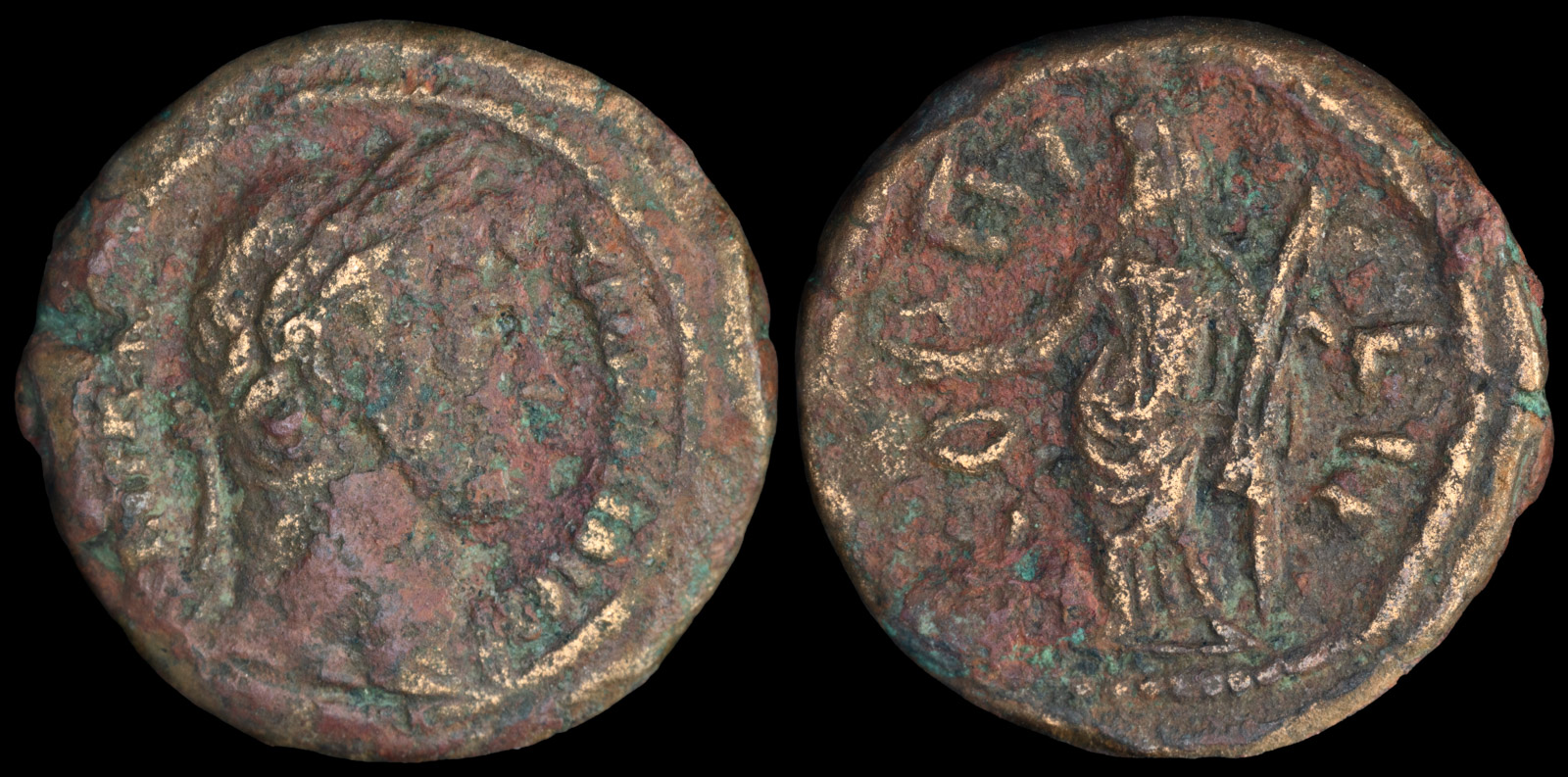
Egypt, Coptite nome
Hadrian Dated regnal year 11 (126-127 CE)
AE obol 18mm, 5.1g
ΑΥΤ ΚΑΙ ΤΡΑΙ ΑΔΡΙΑ ϹЄΒ, laureate bust right, with slight drapery. Reverse – ΚΟΠΤ /
L ΙΑ (date), Sobek-Geb/Kronos standing left, bearded and veiled, wearing sun disk, holding harpa and dorcas gazelle.
RPC III 6276; Dattari (Savio) 6231; Emmett 1256.11
Filter coins
Coptite Nome, Egypt 126-127 CE
Eikonion, Lykaonia 100-0 BCE
Komana, Pontos ca 180 BCE
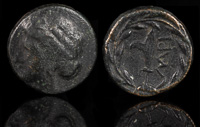
Larissa Kremaste, Thessaly 302-286 BCE

Perseus 179-168 BCE
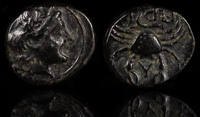
Priapos, Mysia 300-200 BCE