Gorytos
View All Tags
The gorytos was generally worn on the back or hip, allowing the archer to carry their equipment while leaving their hands free for combat or other activities. The structure of the gorytos typically allowed for the safe storage of both arrows and the bow, with separate compartments or loops to keep the arrows organized and easily accessible. This made the gorytos an important item for those who relied on archery as a primary means of combat or hunting, and it could often be found in the military gear of Greek soldiers, especially in Eastern Greek and Hellenistic periods, where archery was a prominent part of the armed forces.
In terms of artistic depiction, the gorytos is often seen in pottery and other forms of Greek art, typically shown alongside figures in active combat or hunting scenes. One notable example is its frequent appearance in the depictions of Amazon warriors, who were often shown carrying bows and gorytos cases as part of their martial equipment. The gorytos is also featured in the art of the Scythians, who were famous for their use of the bow, with their version of the gorytos being more elaborate and decorated, reflecting their distinctive culture and warfare traditions.
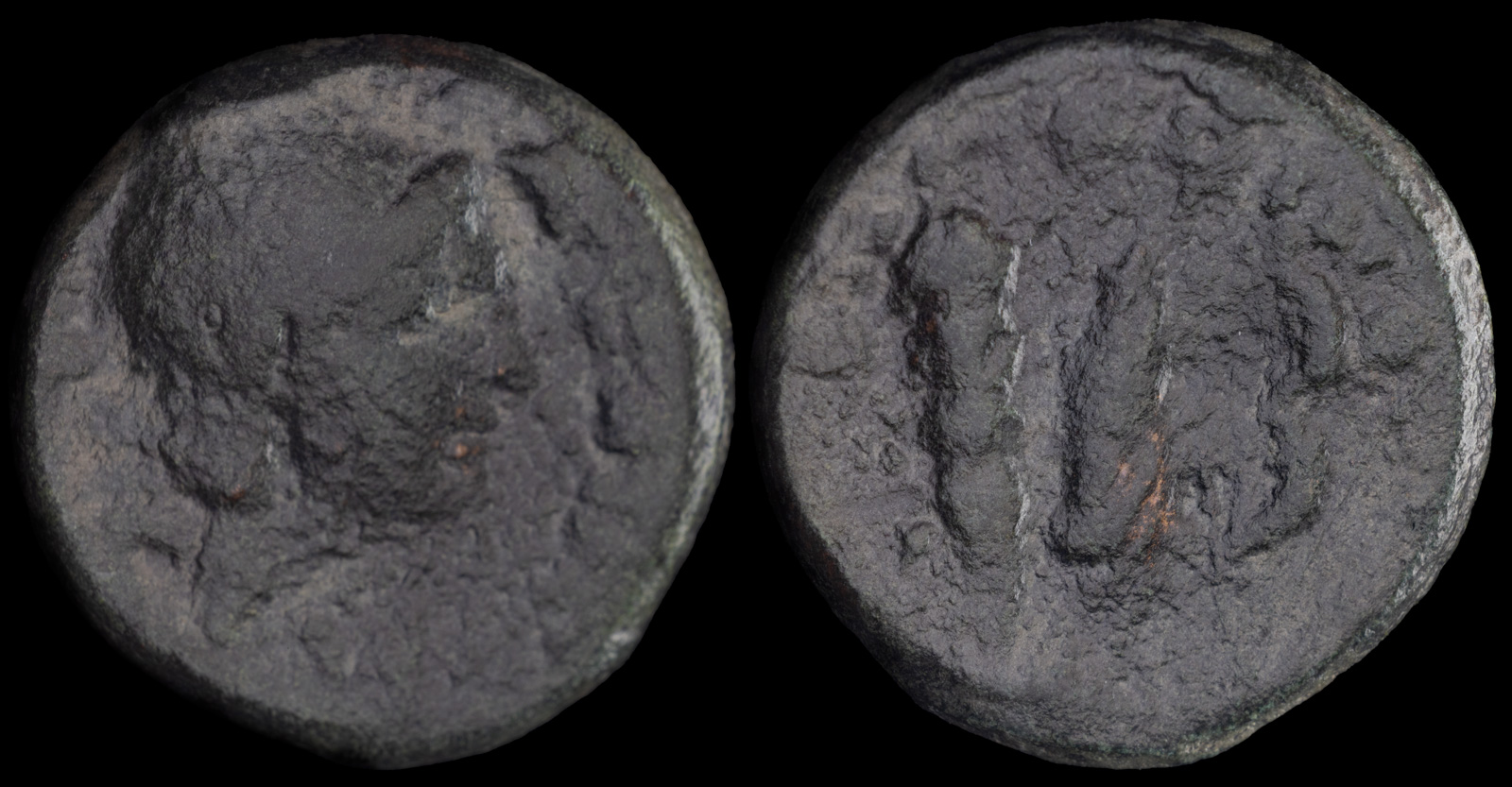
Macedon. Koinon of Macedon
Pseudo-autonomous issue
Time of Gordian III 238-244 CE
Æ 20mm, 5,91g
AΛEΞANΔPOY Head of Alexander the Great to right, wearing crested Attic helmet with griffin on the bowl
Rev. KOINON MAKEΔONΩN B NE around the weapons of Herakles, bow, club and gorytos with arrows; above, star.
AMNG 823
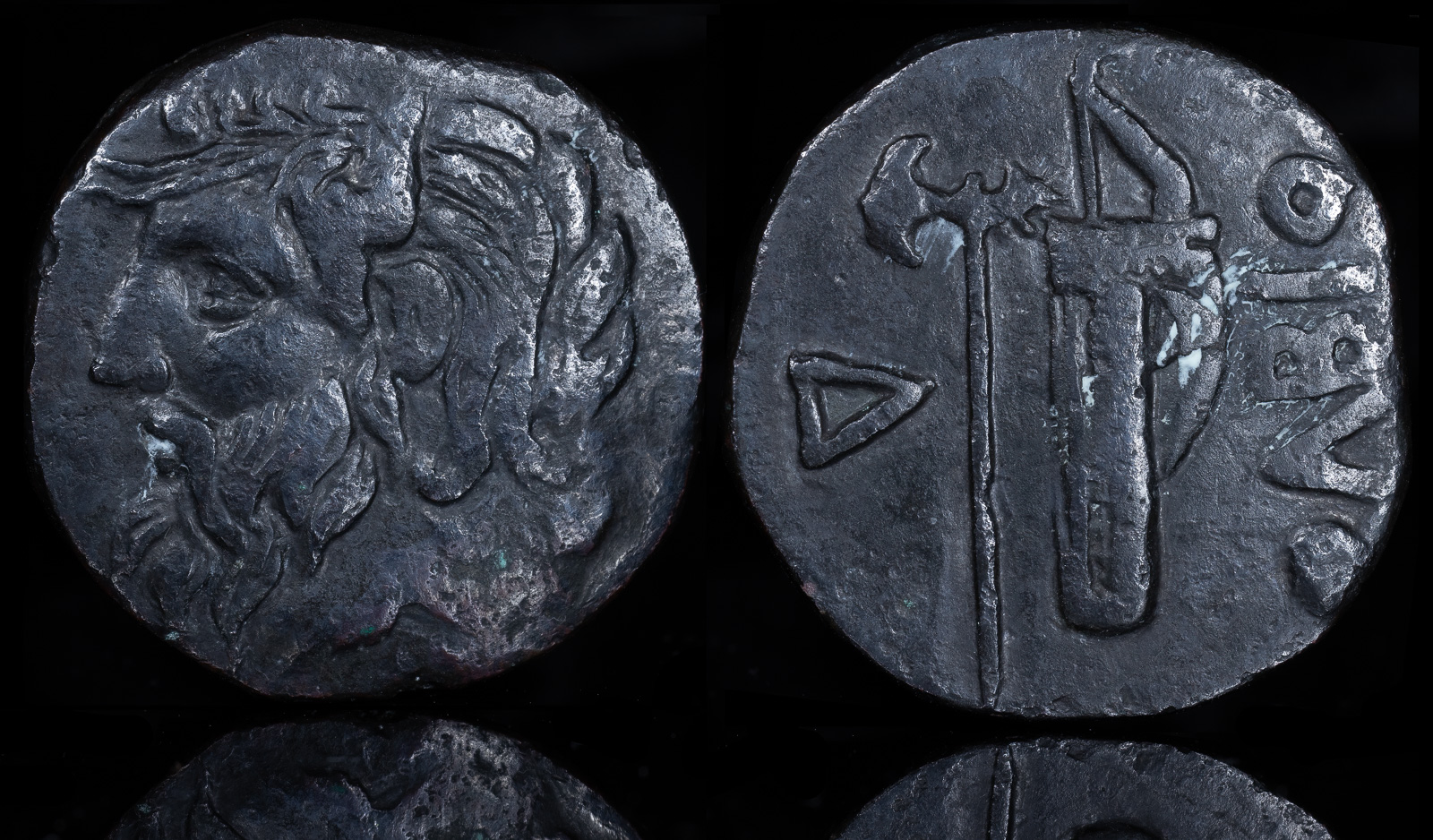
Skythia, Olbia
Æ 10.54g, 24mm, 9h.
Circa 330-320 BCE
Horned and bearded head of river god Borysthenes to left / Axe and bow in gorytos, ΟΛΒΙΟ upwards to right, Δ to left.
SNG Moskau 978-82; SNG Stancomb -; SNG BM Black Sea 457-9; HGC 3.2, 1887.
Ex collection of GK
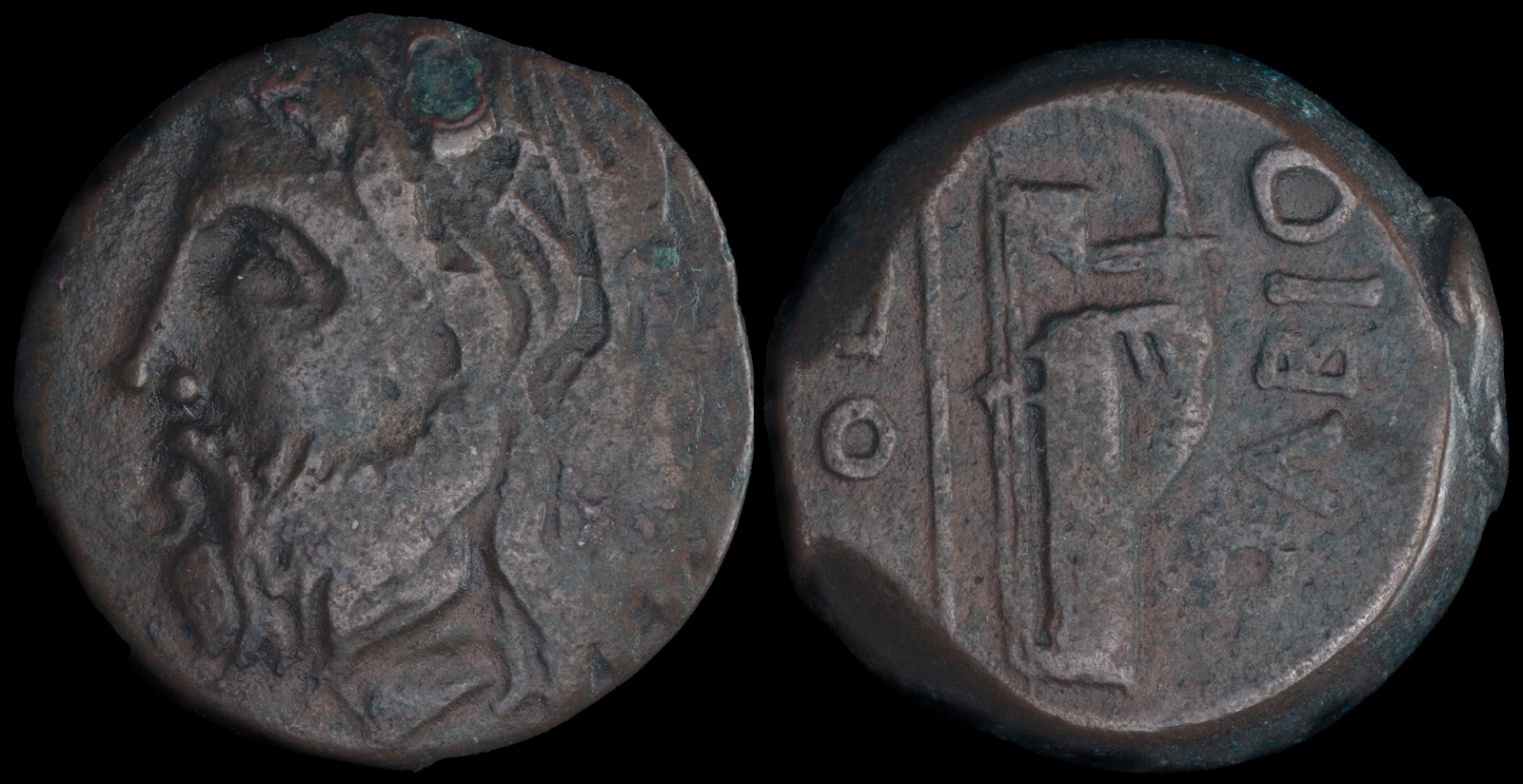
Scythia. Olbia
Poli- magistrate
Ca 290-271 BCE
Æ 22mm, 9,51g
Horned and bearded head of Borysthenes left /
ΟΛΒΙΟ, axe and bow in gorytos, ΠΟ to left
SNG Moskau SHM 1056-8; SNG BM Black Sea 474; HGC 3.2, 1887; Nikolaev 24