Kotyle
View All Tags
The kotyle was primarily used for drinking wine, which was the beverage of choice in many Greek social contexts. It was often employed during the symposium, a social gathering where men would engage in conversation, philosophy, and entertainment while consuming wine. The kotyle’s relatively small size made it ideal for the controlled consumption of wine, especially in the context of mixing wine with water—an important cultural practice in Greece, as drinking undiluted wine was considered barbaric. The kotyle’s design allowed for easy handling and sipping, contributing to its popularity in these settings.
The kotyle also had a presence in religious ceremonies and rituals. It was sometimes used in offerings to the gods, particularly during libations. The Greeks would pour wine or other liquids from the kotyle as part of sacrifices or prayers, believing that this act would honor deities and ensure their favor. Its use in rituals highlighted its connection to divine offerings and its role in maintaining the relationship between the mortal and the divine.

Kings of Thrace. Odrysian, uncertain king
405-340 BCE
Æ 11mm, 0,92g
Obverse: Female head with specifically set hair within solid circle.
Reverse: Conical (ritual?) vessel with two handles (kotyle?) within small concave circle. Anepigraphic.
Topelov 2004 N.4
Filter coins
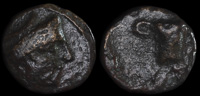
Anapegraphic Odrysian 405-340 BCE
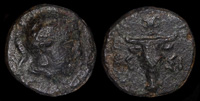
Assos, Troas 400-241 BCE
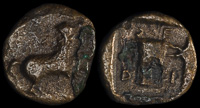
Bizye, Thrace 405-387 BCE
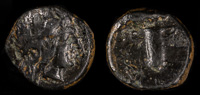
Demetrios I, Thrace 4th-3rd cents BCE
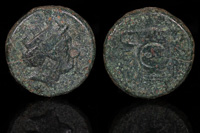
Hebryzelmis 389-383 BCE
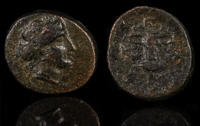
Kersebleptes, Thrace 360-341 BCE
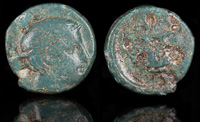
Kotys I 383-359 BCE

Kyme, Aeolis 320-250 BCE

Kyme, Aeolis 320-250 BCE

Kyme, Aeolis 350-250 BCE
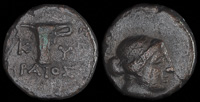
Kyme, Aoelis 350-250 BCE
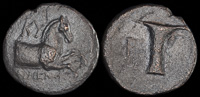
Kyme, Aoelis 350-250 BCE
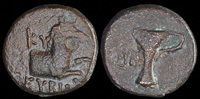
Kyme, Aoelis 350-250 BCE
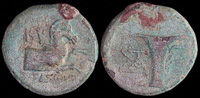
Kyme, Aoelis 350-250 BCE
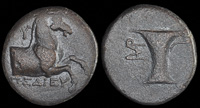
Kyme, Aoelis 350-250 BCE
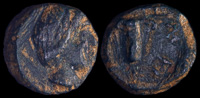
Odrysian Uncertain King ‘MN’ 405-340 BCE
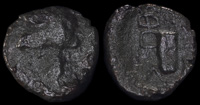
Philemon 405-340 BCE
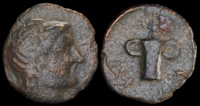
Philemon, King of Thrace 405-340 BCE
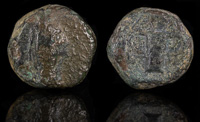
Uncertain Odrysian 405-340 BCE